Classic Cairo4.8
Cairo
The Egyptian Museum, Citadel, Khan El Khalili Bazaar and Old Cairo
Five thousand years in one day: pharaohs in Tahrir, Saladin's citadel, the Hanging Church and the bazaar.
9 hPrivate
€85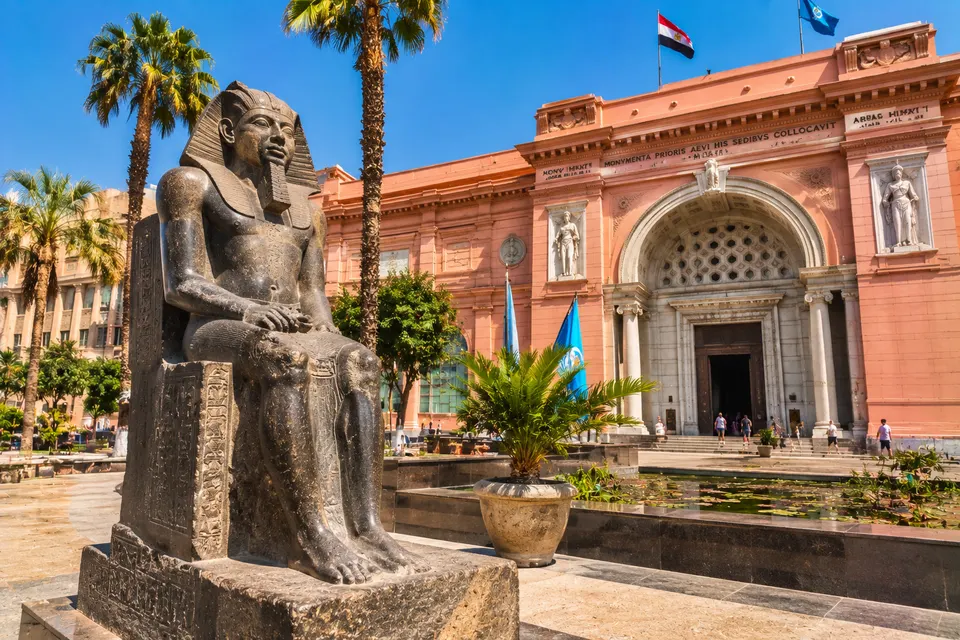
The 1902 museum of the pharaohs, and the new home of the royal mummies in Fustat.
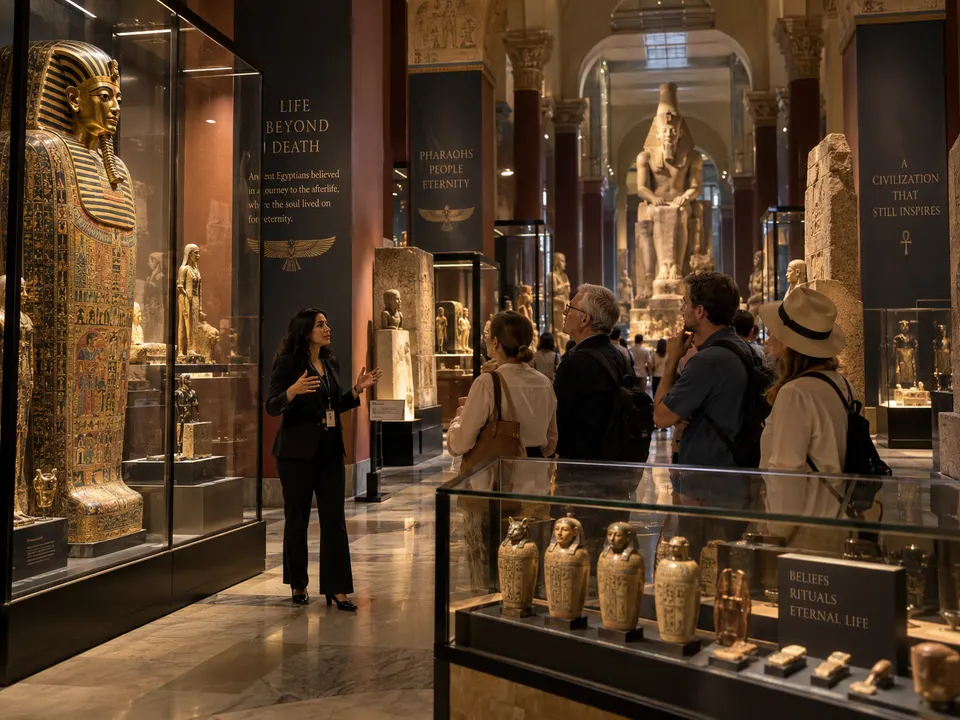
The Egyptian Museum on Tahrir Square (1902) holds 120,000 objects: the Narmer Palette, the Old Kingdom statues, the Amarna gallery. Tutankhamun's treasures moved to the Grand Egyptian Museum and the royal mummies to the National Museum of Egyptian Civilization (NMEC) in Fustat in 2021. Tickets about 550 EGP each; our Cairo days include one museum or the other with an Egyptologist.
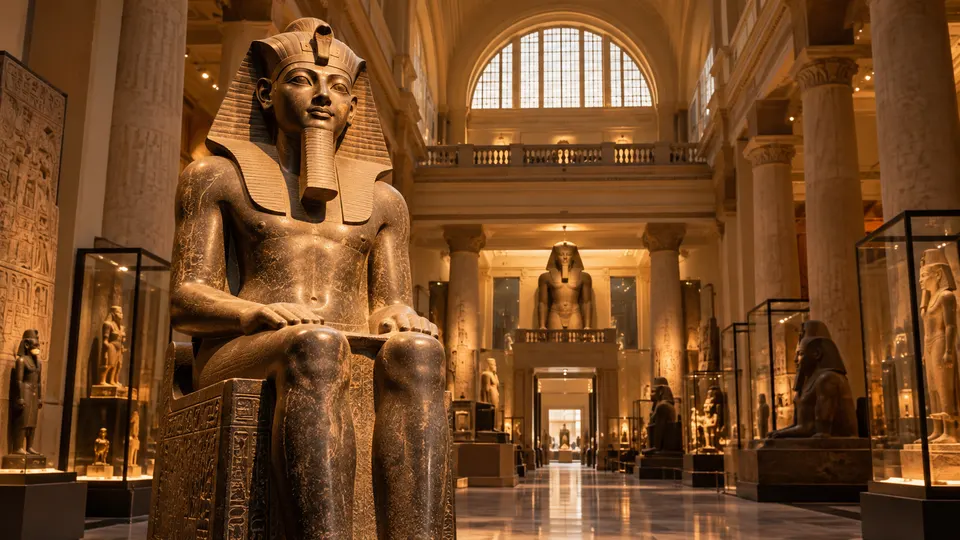
The neoclassical building on Tahrir Square is the oldest purpose-built museum in the Middle East, and although its two most famous collections have moved, it remains the best place in the world for the art of the Old Kingdom: the seated Khafre in diorite, the wooden Sheikh el-Balad, the painted Rahotep and Nofret, the Meidum geese. The Amarna gallery upstairs shows Akhenaten, Nefertiti and their daughters.
The National Museum of Egyptian Civilization sits by the lake of Ain El Sira in Fustat, the first Islamic capital. Its main hall tells the story of Egypt through crafts and daily life; below it, the Royal Mummies Hall, designed like a tomb, holds twenty kings and queens moved here from Tahrir in the Pharaohs' Golden Parade of April 2021. Ramses II, Seti I and Hatshepsut lie in separate chambers.
Our Cairo days pair either museum with the Citadel, Coptic Cairo and Khan El Khalili. The museum comes first in the morning, when the galleries are quiet.
Best time: Mornings on weekdays. Fridays and Saturdays are busy with Cairo families.