Klassisk Cairo4.8
Cairo
Det Egyptiske Museum, Citadellet, Khan El Khalili-basaren og det gamle Cairo
Fem tusind år på én dag: faraoner på Tahrir, Saladins citadel, Den Hængende Kirke og basaren.
9 tPrivat
85 €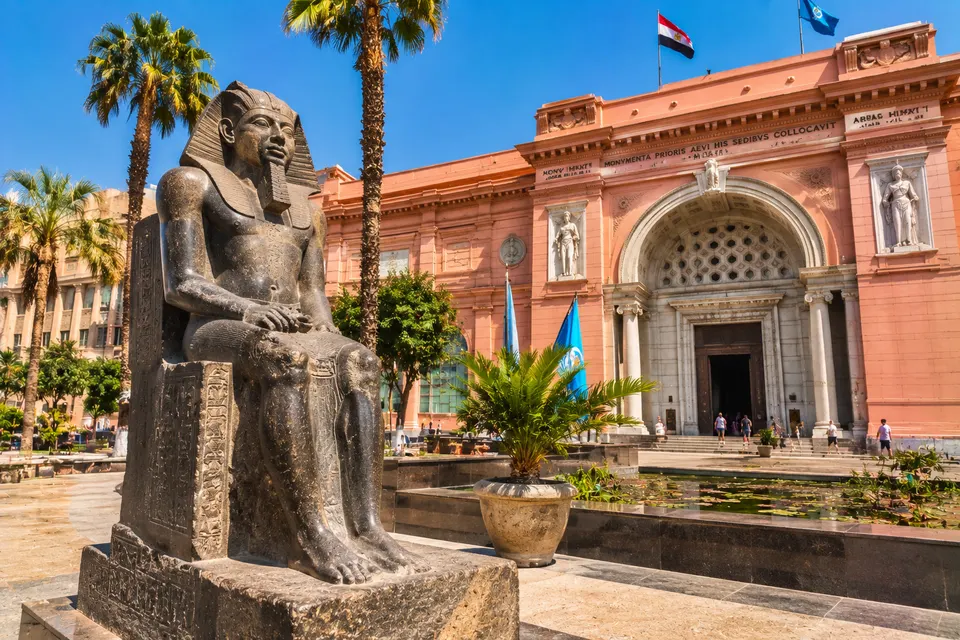
Faraonernes museum fra 1902 og de kongelige mumiers nye hjem i Fustat.
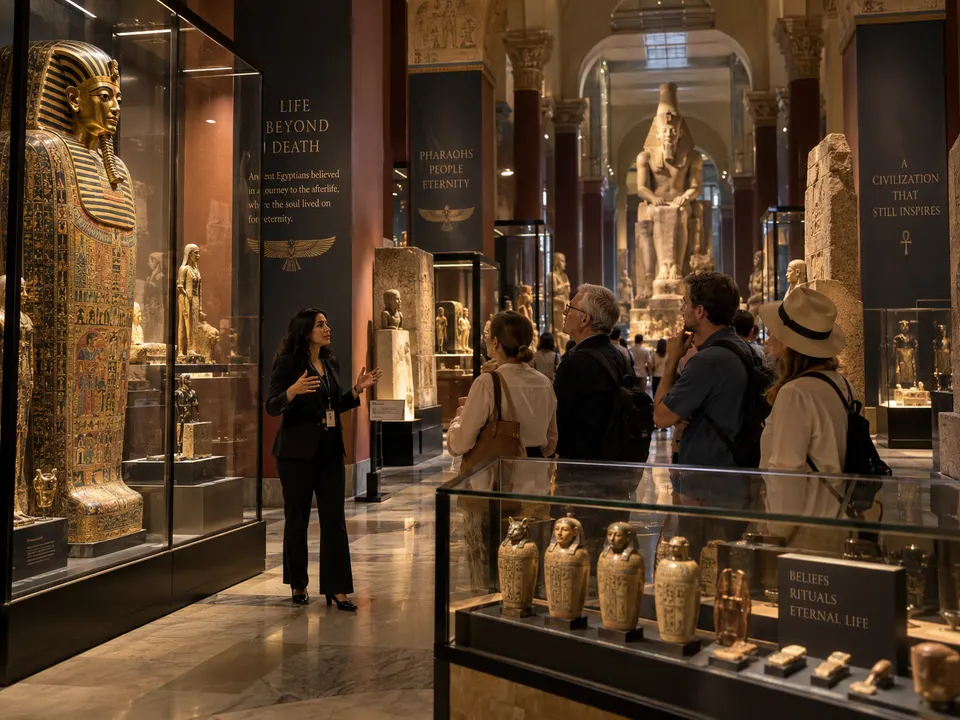
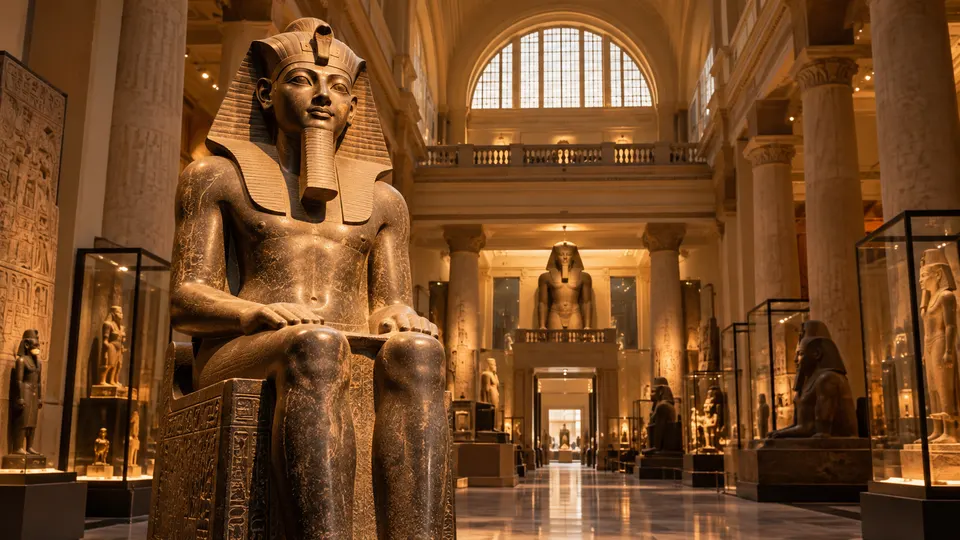
Det Egyptiske Museum på Tahrir-pladsen (1902) rummer 120.000 genstande: Narmer-paletten, Det Gamle Riges statuer, Amarna-galleriet. Tutankhamons skatte flyttede til Det Store Egyptiske Museum og de kongelige mumier til Det Nationale Museum for Egyptisk Civilisation (NMEC) i Fustat i 2021. Billetter omkring 550 EGP hver; vores Cairo-dage inkluderer det ene eller det andet museum med egyptolog.
The neoclassical building on Tahrir Square is the oldest purpose-built museum in the Middle East, and although its two most famous collections have moved, it remains the best place in the world for the art of the Old Kingdom: the seated Khafre in diorite, the wooden Sheikh el-Balad, the painted Rahotep and Nofret, the Meidum geese. The Amarna gallery upstairs shows Akhenaten, Nefertiti and their daughters.
The National Museum of Egyptian Civilization sits by the lake of Ain El Sira in Fustat, the first Islamic capital. Its main hall tells the story of Egypt through crafts and daily life; below it, the Royal Mummies Hall, designed like a tomb, holds twenty kings and queens moved here from Tahrir in the Pharaohs' Golden Parade of April 2021. Ramses II, Seti I and Hatshepsut lie in separate chambers.
Our Cairo days pair either museum with the Citadel, Coptic Cairo and Khan El Khalili. The museum comes first in the morning, when the galleries are quiet.
Bedste tidspunkt: Hverdagsformiddage. Fredage og lørdage er travle med familier fra Cairo.