Wschodni brzeg5.0
Luksor
Świątynie w Karnaku i Luksorze: półdniowa wycieczka prywatna
Dwie wielkie świątynie wschodniego brzegu w cztery godziny, rano lub późnym popołudniem.
4 godz.Prywatna
45 €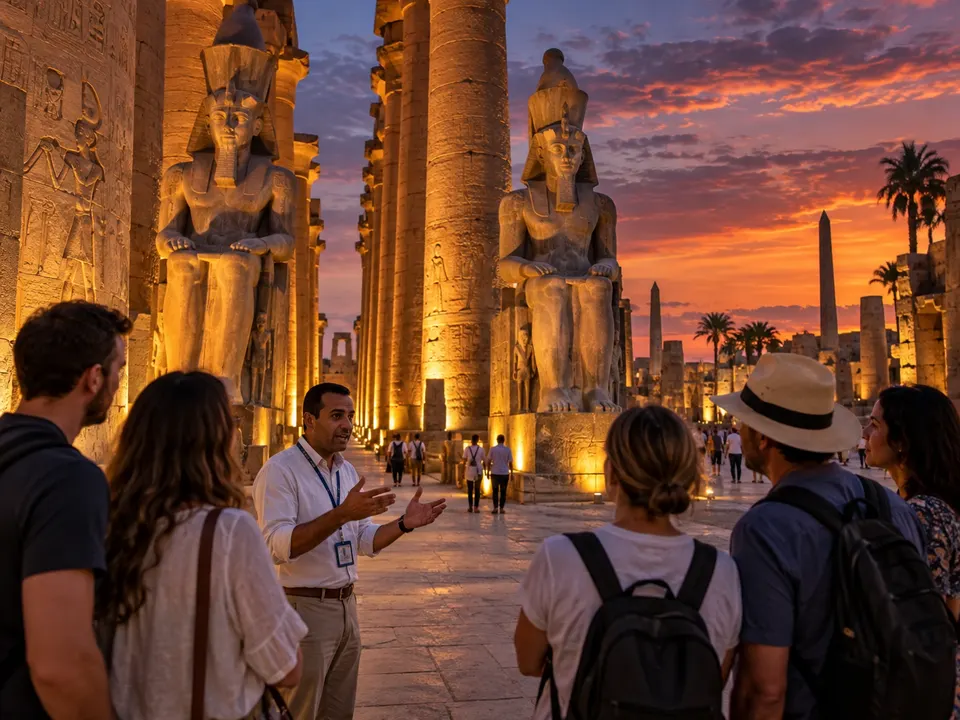
Świątynia Amenhotepa III w środku miasta, najpiękniejsza, gdy zapalają się światła.
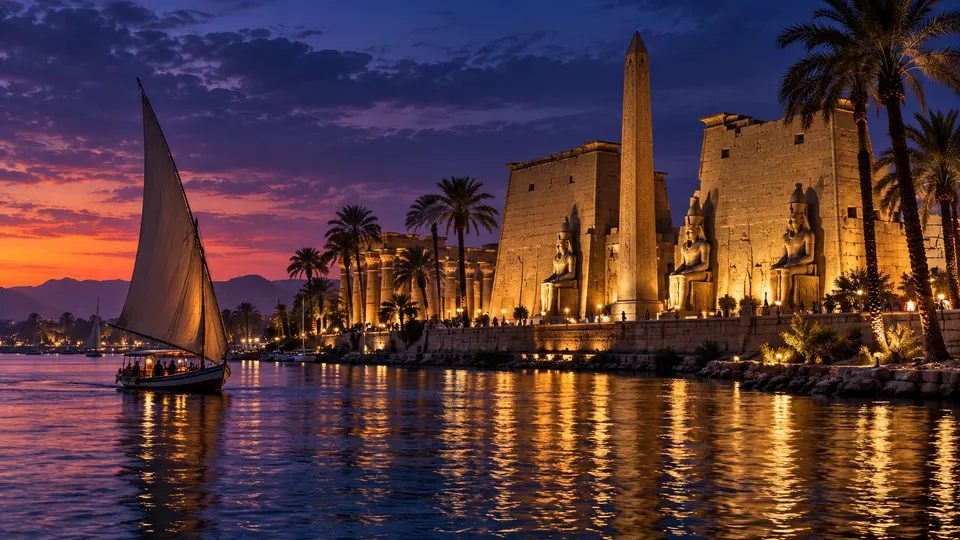
Świątynię Luksorską zbudował Amenhotep III około 1390 p.n.e., a ukończyli Tutanchamon i Ramzes II, którego pylon i pojedynczy obelisk (jego bliźniak stoi w Paryżu) tworzą jej front. Wewnątrz stoi meczet Abu al-Haggaga, a z tyłu kaplica rzymska. Godzina z przewodnikiem; bilet około 500 EGP; otwarta do 21:00, po zmroku oświetlona. W cenie naszego dnia w Luksorze i półdniowej wycieczki po wschodnim brzegu.
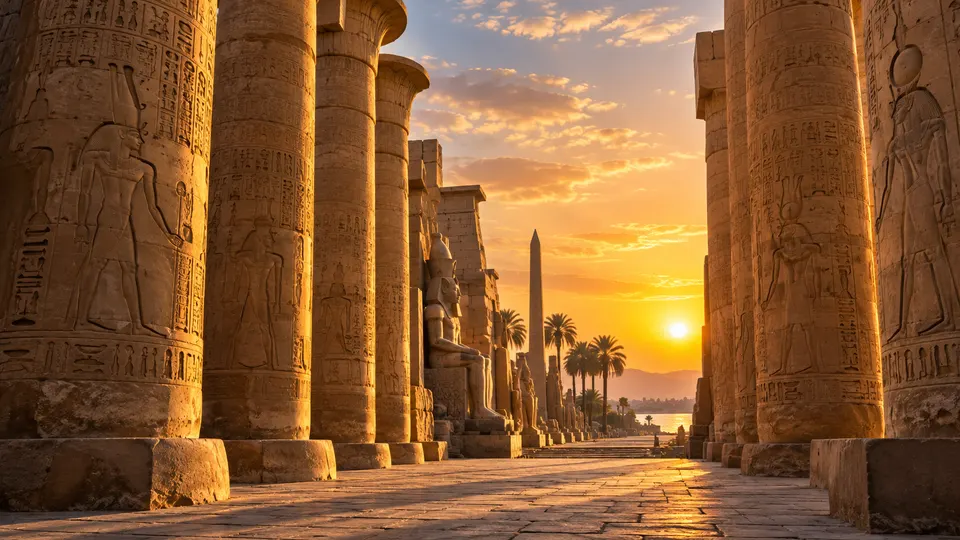
Luxor Temple was the "southern sanctuary" where the statue of Amun came from Karnak every year for the Opet festival along the Avenue of Sphinxes. Ramses II added the pylon with his colossi and the two obelisks, one given to France in 1833. Behind the courtyard runs the colonnade of Amenhotep III, carved with the Opet procession under Tutankhamun.
The temple was never abandoned: the Romans made it a fort and painted a chapel to the emperors in the sanctuary; the Copts built churches in the courtyards; the mosque of Abu Haggag, built on the rubble in the 13th century, still stands on top of the Ramses court with its door six metres above the ancient floor.
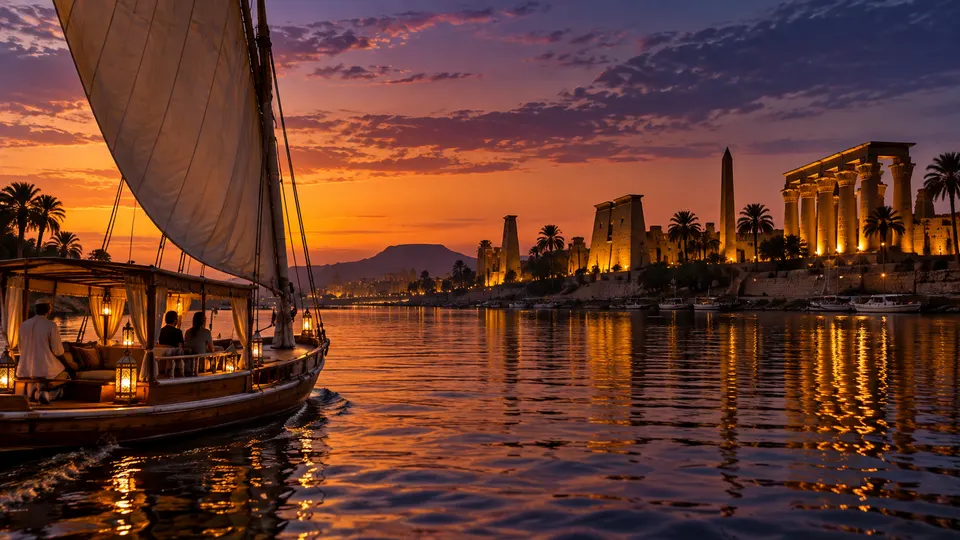
It is small enough for an hour and at its best when the sun has gone and the stones are lit. Our afternoon East Bank tour and the felucca sails are timed for that.
Najlepszy czas: Zmierzch, o każdej porze roku.
Luksor
Dwie wielkie świątynie wschodniego brzegu w cztery godziny, rano lub późnym popołudniem.
Luksor
Oba brzegi Nilu w jeden dzień: rano grobowce faraonów, po południu wielkie świątynie.