Bestseller4.9
Luksor
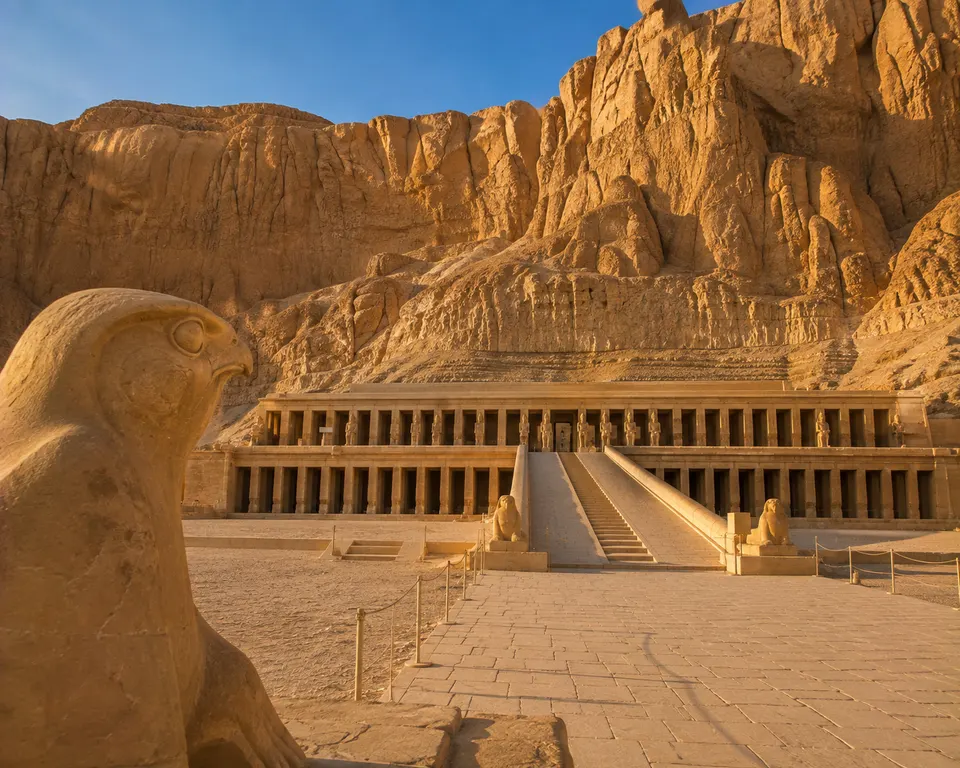
Luksor cały dzień: Dolina Królów, świątynia Hatszepsut, Kolosy Memnona, Karnak i świątynia Luksorska
Oba brzegi Nilu w jeden dzień: rano grobowce faraonów, po południu wielkie świątynie.
8 godz.Prywatna
75 €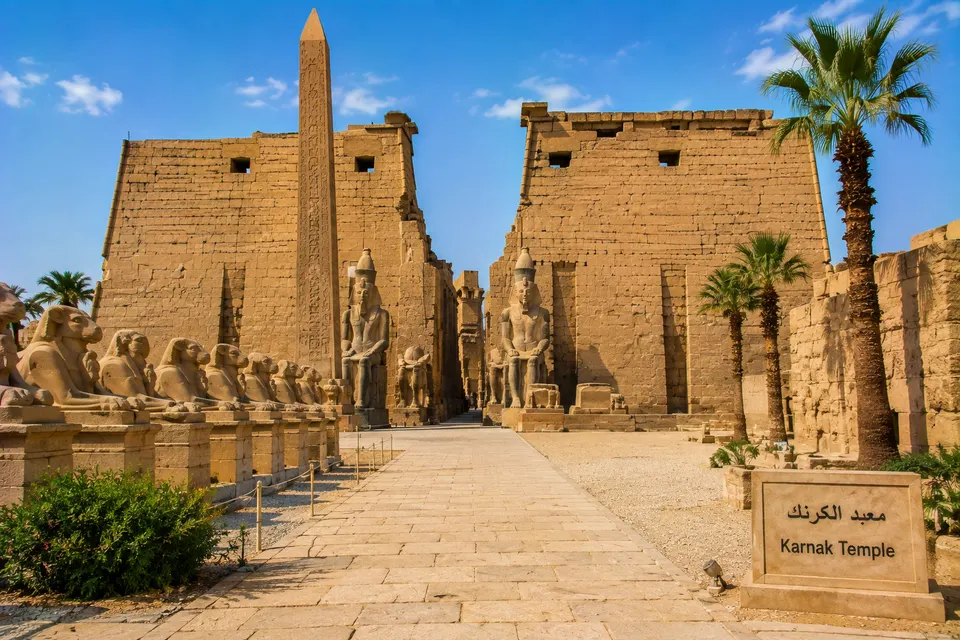
Największa budowla religijna, jaką kiedykolwiek wzniesiono, powstająca przez 2000 lat.
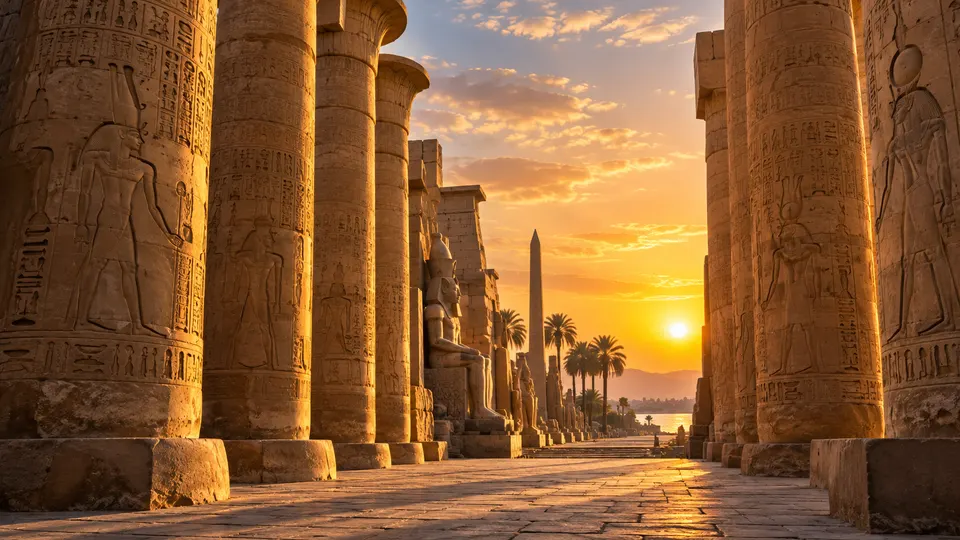
Karnak to świątynia Amona w Tebach, budowana i rozbudowywana od około 2055 p.n.e. do Ptolemeuszy na 100 hektarach: Wielka Sala Hypostylowa o 134 kolumnach, obeliski Hatszepsut i Totmesa III, święte jezioro i Aleja Sfinksów do świątyni Luksorskiej. Dwie godziny z przewodnikiem; bilet około 600 EGP; wieczorem pokaz światło i dźwięk. W cenie każdej wycieczki jednodniowej po Luksorze.
Every pharaoh of the New Kingdom added to Karnak, so walking from the first pylon to the sanctuary is walking backwards in time. The Avenue of Ram-headed Sphinxes leads through the pylon of the last dynasty into the courtyard, then the Great Hypostyle Hall: twelve central columns 21 m high with open papyrus capitals, 122 smaller ones around them, all carved and once painted.
Beyond the hall stand the obelisks of Thutmose I and Hatshepsut, the sanctuary of the sacred bark, the Festival Hall of Thutmose III with its tent-pole columns, and the sacred lake where the priests washed before dawn. The open-air museum keeps the reconstructed White Chapel of Senusret I and the Red Chapel of Hatshepsut.
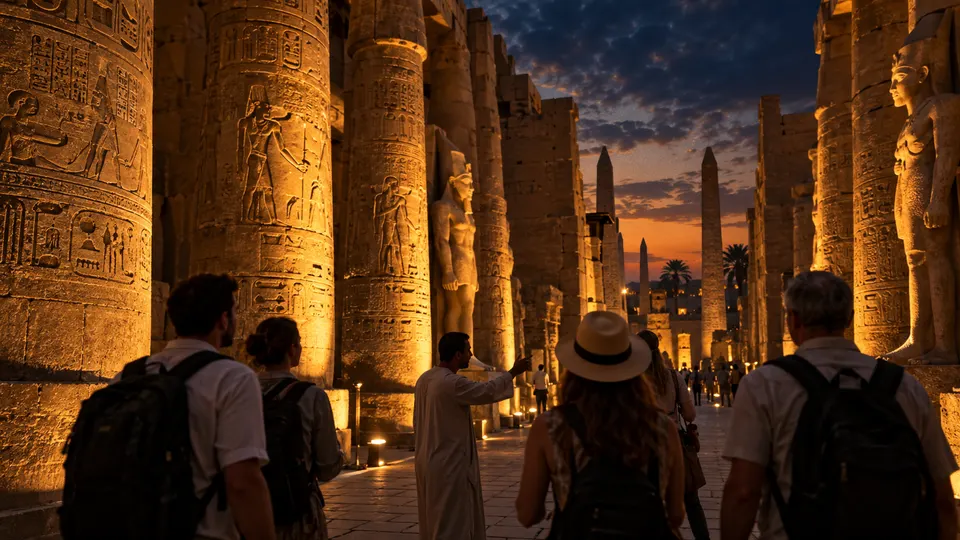
At night the Sound and Light Show leads you through the same route with the columns lit from below; by day the site opens at 06:00 and the first hour is the quietest.
Najlepszy czas: Wczesny poranek lub od 15:00; od października do kwietnia ze względu na upał.
Luksor
Oba brzegi Nilu w jeden dzień: rano grobowce faraonów, po południu wielkie świątynie.