Bestseller4.9
Luksor
Luksor cały dzień: Dolina Królów, świątynia Hatszepsut, Kolosy Memnona, Karnak i świątynia Luksorska
Oba brzegi Nilu w jeden dzień: rano grobowce faraonów, po południu wielkie świątynie.
8 godz.Prywatna
75 €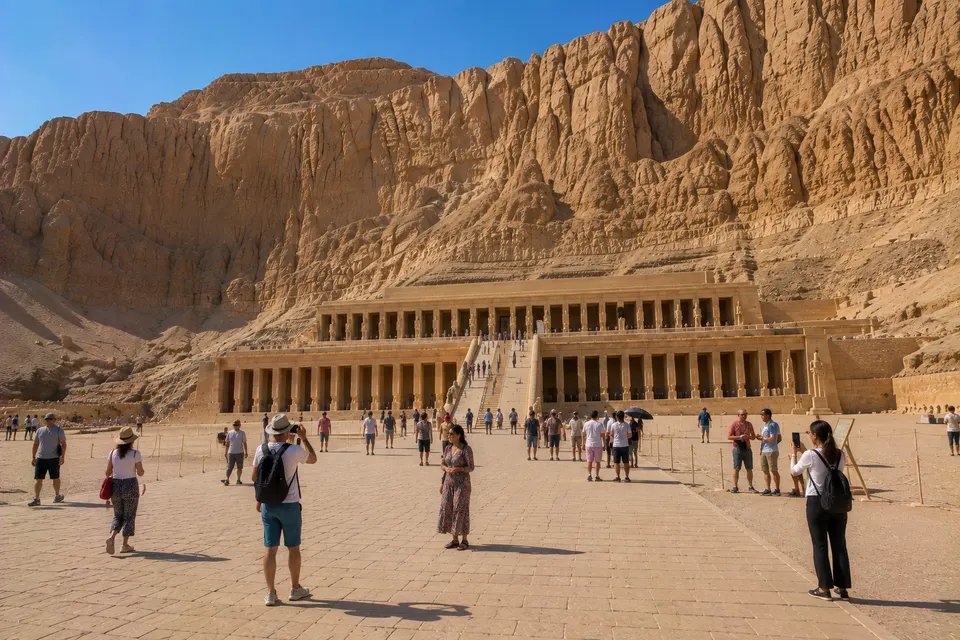
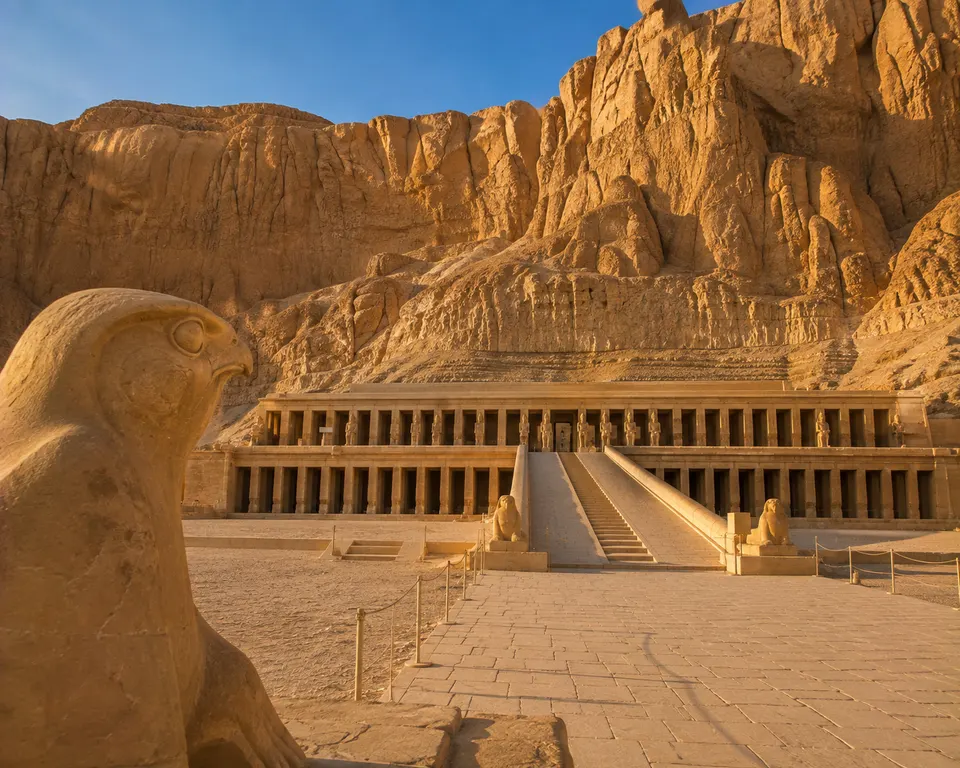
Tarasowa świątynia kobiety, która rządziła jako król, pod urwiskiem w Deir el-Bahari.
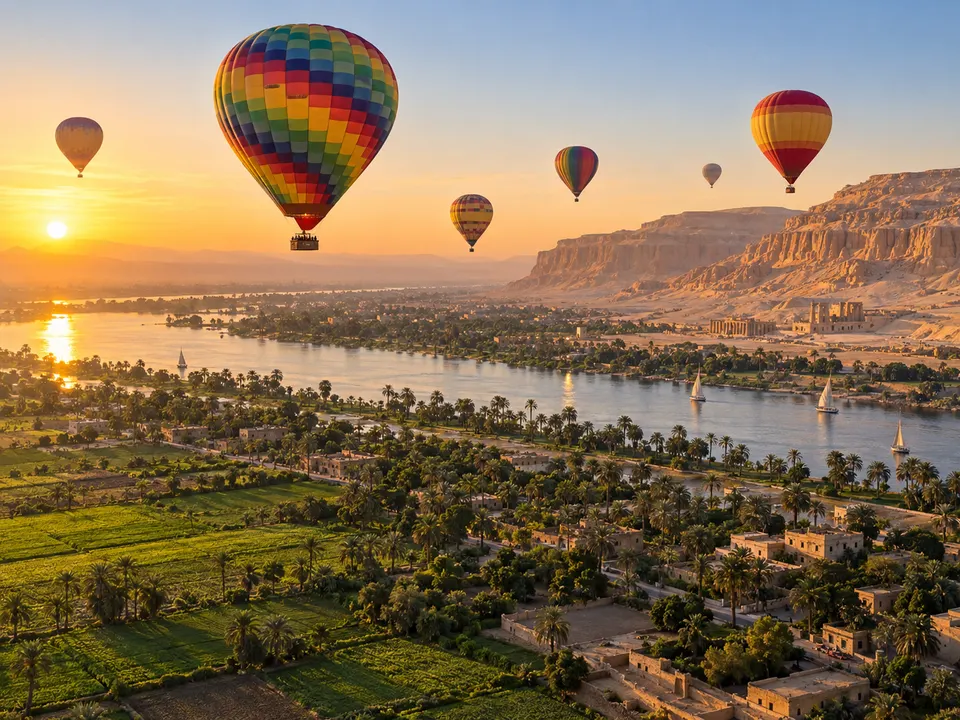
Świątynia Hatszepsut w Deir el-Bahari (ok. 1479–1458 p.n.e., architekt Senenmut) wznosi się trzema tarasami z kolumnadami na tle urwiska gór tebańskich, z reliefami wyprawy do Puntu i kaplicą Hathor. Kolosy Memnona, dwa 18-metrowe posągi Amenhotepa III, stoją przy drodze do niej. Oba miejsca są na każdej wycieczce po zachodnim brzegu; balon przelatuje nad nimi o wschodzie słońca.
Hatshepsut ruled Egypt for twenty years as pharaoh in her own right, and her mortuary temple is unlike any other: three terraces of columns climbing the cliff at Deir el-Bahari next to the Middle Kingdom temple of Mentuhotep II, aligned on Karnak across the river. The upper terrace was restored by a Polish mission over fifty years.
The reliefs on the middle terrace tell the expedition she sent to the land of Punt (probably Eritrea or Somalia) for incense trees, with the fat queen of Punt and the fish of the Red Sea, and the story of her divine birth by Amun. The chapels of Hathor and Anubis keep their colour. Her successor Thutmose III chiselled out her name; the archaeologists put it back.
The Colossi of Memnon on the road are all that stands of the largest temple in Thebes, that of Amenhotep III. After an earthquake in 27 BC the northern statue "sang" at dawn and the Greeks and Romans came to hear it; Septimius Severus repaired it and the singing stopped.
Najlepszy czas: Wczesny poranek; balony przelatują między 06:00 a 07:00.
Luksor
Oba brzegi Nilu w jeden dzień: rano grobowce faraonów, po południu wielkie świątynie.