Transfer w jedną stronę4.9
Luksor
Prywatna wycieczka z Luksoru do Asuanu: świątynie w Esnie, Edfu i Kom Ombo
Droga wzdłuż Nilu na południe z trzema świątyniami, przy których zatrzymują się statki, z metą w Asuanie.
10 godz.Prywatna
120 €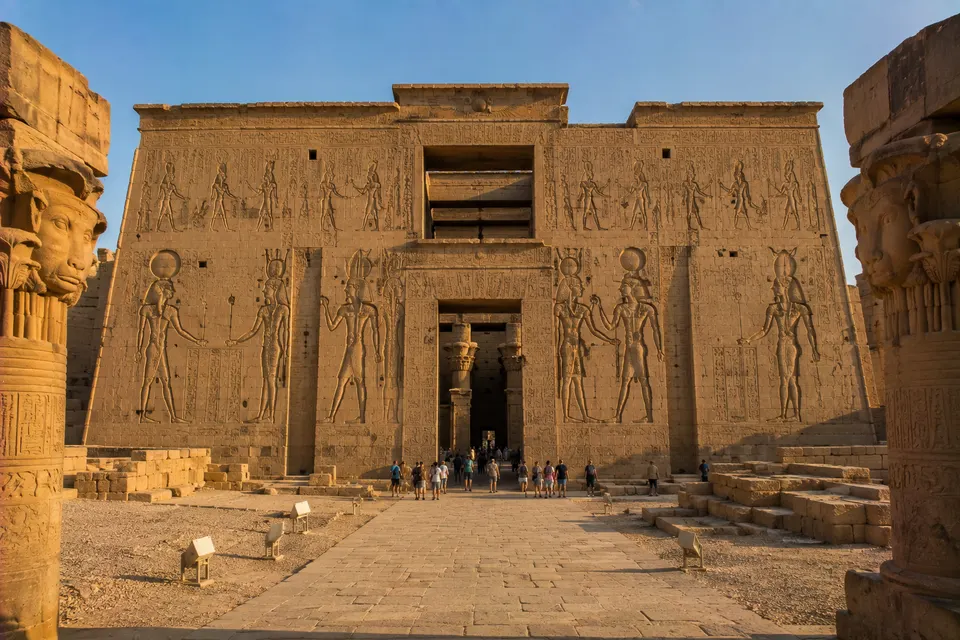
Ptolemejskie świątynie między Luksorem a Asuanem, kompletne od podłogi po dach.
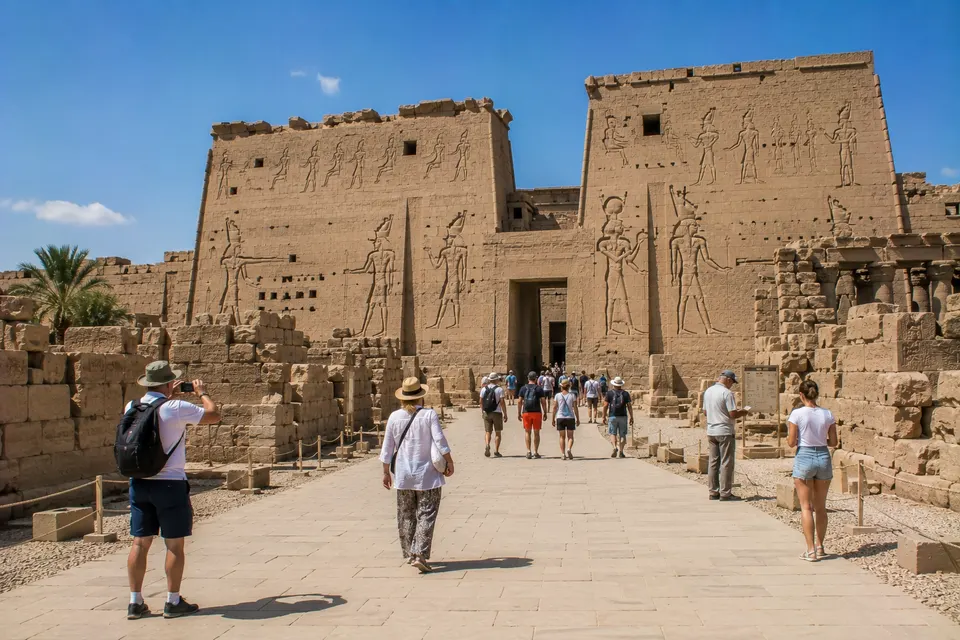
Między Luksorem a Asuanem stoją prawie nienaruszone trzy późne świątynie: świątynia Chnuma w Esnie (rzymska sala hypostylowa poniżej poziomu ulicy), świątynia Horusa w Edfu (237–57 p.n.e., najlepiej zachowana w Egipcie) i podwójna świątynia Sobka i Horusa w Kom Ombo z muzeum krokodyli. Statki po Nilu zatrzymują się przy wszystkich trzech; prywatnym samochodem tworzą dziesięciogodzinną wycieczkę-transfer z Luksoru do Asuanu.
The Ptolemies built in the old style but with a complete plan, and because these temples were buried in silt and villages until the 19th century, they kept their roofs and their reliefs. Edfu is the model: the tallest pylon after Karnak, a courtyard, two hypostyle halls, the sanctuary with the granite shrine of Nectanebo, and the walls carved with the myth of Horus defeating Seth in the form of a hippopotamus.
Kom Ombo sits on a bend of the Nile with two of everything: two entrances, two sanctuaries, one side for the crocodile god Sobek and one for Horus the Elder. The relief of surgical instruments on the rear wall and the Nilometer are the famous details; the crocodile museum next door shows the mummified animals from the temple's sacred lake.
Esna's temple survives only as its hypostyle hall, nine metres below the street of the modern town, with columns whose capitals are all different and a ceiling cleaned in the 2020s to its original colour.
Najlepszy czas: Od października do kwietnia.