Legnépszerűbb4.9
Luxor
Luxor egész nap: Királyok völgye, Hatsepszut temploma, Memnón-kolosszusok, Karnak és a luxori templom
A Nílus mindkét partja egy nap alatt: délelőtt a fáraók sírjai, délután a nagy templomok.
8 óraPrivát
75 EUR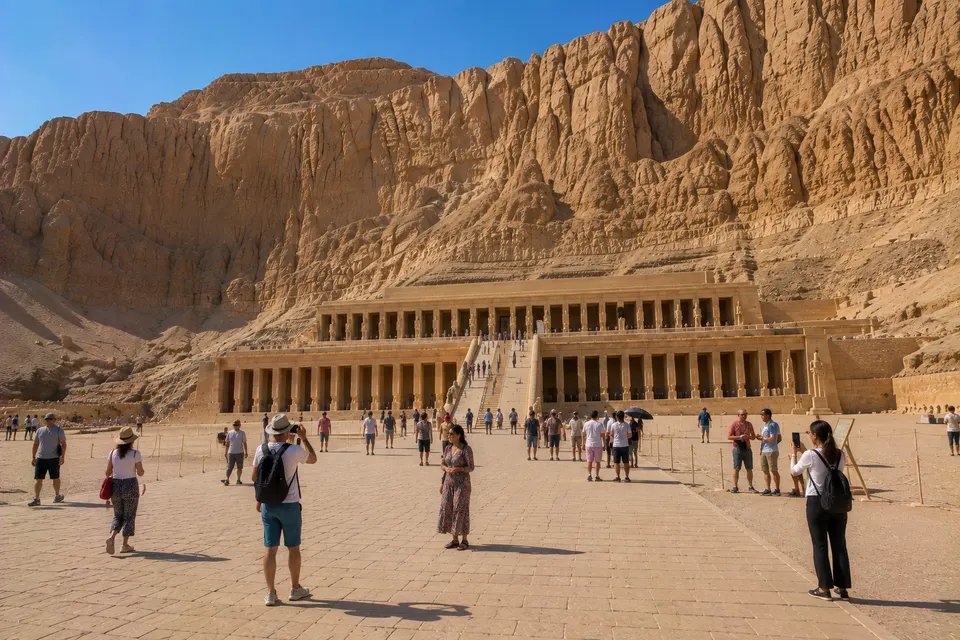
A királyként uralkodó nő teraszos temploma a Deir el-Bahari-i sziklafal alatt.
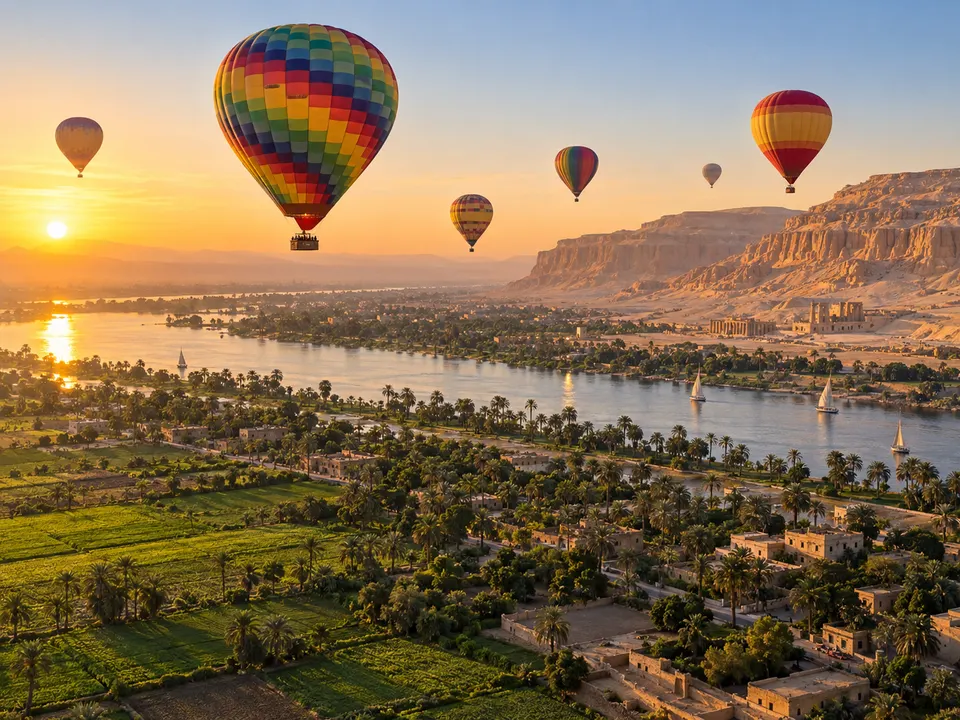
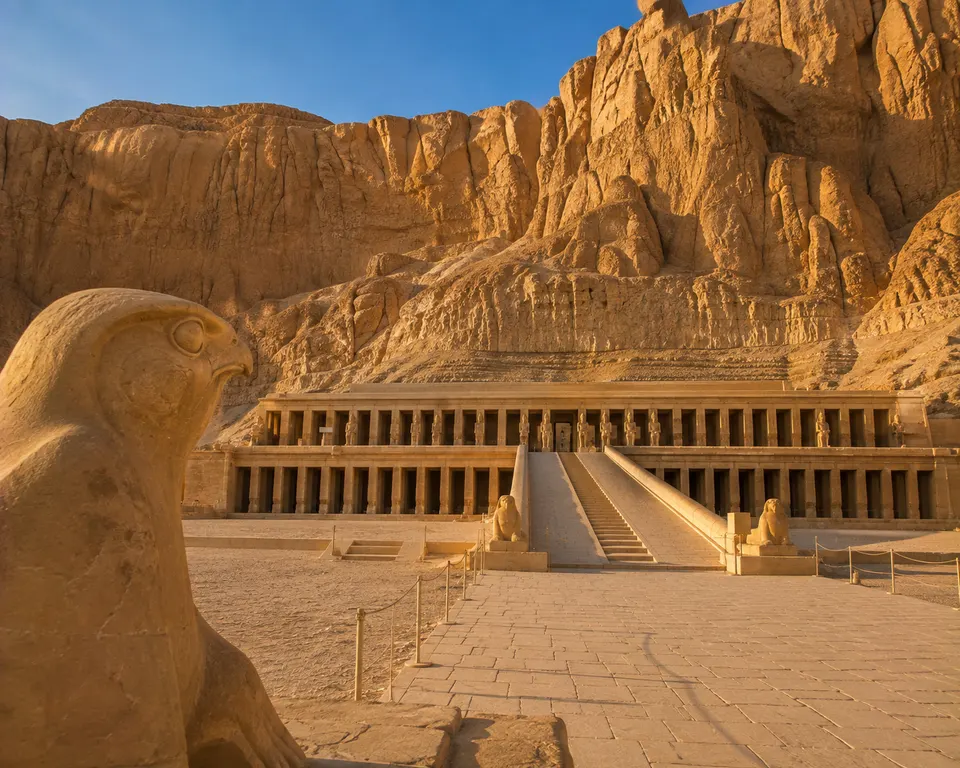
Hatsepszut Deir el-Bahari-i temploma (kb. Kr. e. 1479–1458, Szenenmut építész) három oszlopos teraszban emelkedik a thébai hegység sziklafala előtt, a punti expedíció domborműveivel és a Hathor-kápolnával. A Memnón-kolosszusok, III. Amenhotep két 18 méteres szobra az odavezető út mentén állnak. Mindkettő minden nyugati parti programban benne van; a ballon napfelkeltekor fölöttük repül.
Hatshepsut ruled Egypt for twenty years as pharaoh in her own right, and her mortuary temple is unlike any other: three terraces of columns climbing the cliff at Deir el-Bahari next to the Middle Kingdom temple of Mentuhotep II, aligned on Karnak across the river. The upper terrace was restored by a Polish mission over fifty years.
The reliefs on the middle terrace tell the expedition she sent to the land of Punt (probably Eritrea or Somalia) for incense trees, with the fat queen of Punt and the fish of the Red Sea, and the story of her divine birth by Amun. The chapels of Hathor and Anubis keep their colour. Her successor Thutmose III chiselled out her name; the archaeologists put it back.
The Colossi of Memnon on the road are all that stands of the largest temple in Thebes, that of Amenhotep III. After an earthquake in 27 BC the northern statue "sang" at dawn and the Greeks and Romans came to hear it; Septimius Severus repaired it and the singing stopped.
Legjobb időszak: Kora reggel; a ballonok 06:00 és 07:00 között repülnek át.
Luxor
A Nílus mindkét partja egy nap alatt: délelőtt a fáraók sírjai, délután a nagy templomok.