Luxor
Luxor día completo: Valle de los Reyes, templo de Hatshepsut, Colosos de Memnón, Karnak y templo de Luxor
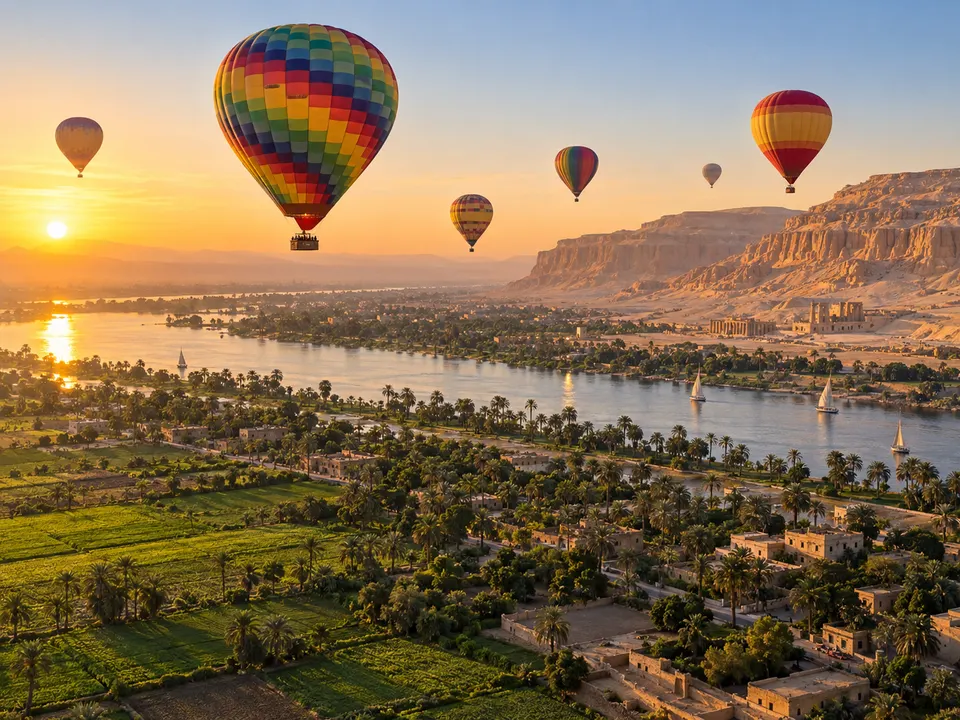
Las dos orillas del Nilo en un día: las tumbas de los faraones por la mañana, los grandes templos por la tarde.

Sesenta y tres tumbas de los faraones del Imperio Nuevo, excavadas en el acantilado detrás de Tebas.
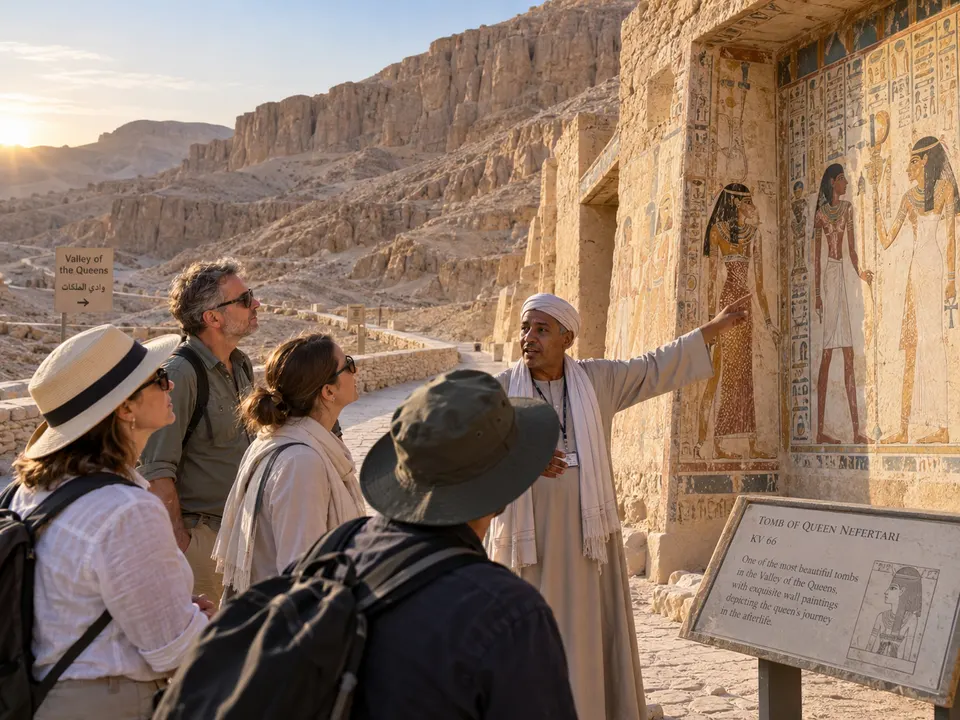
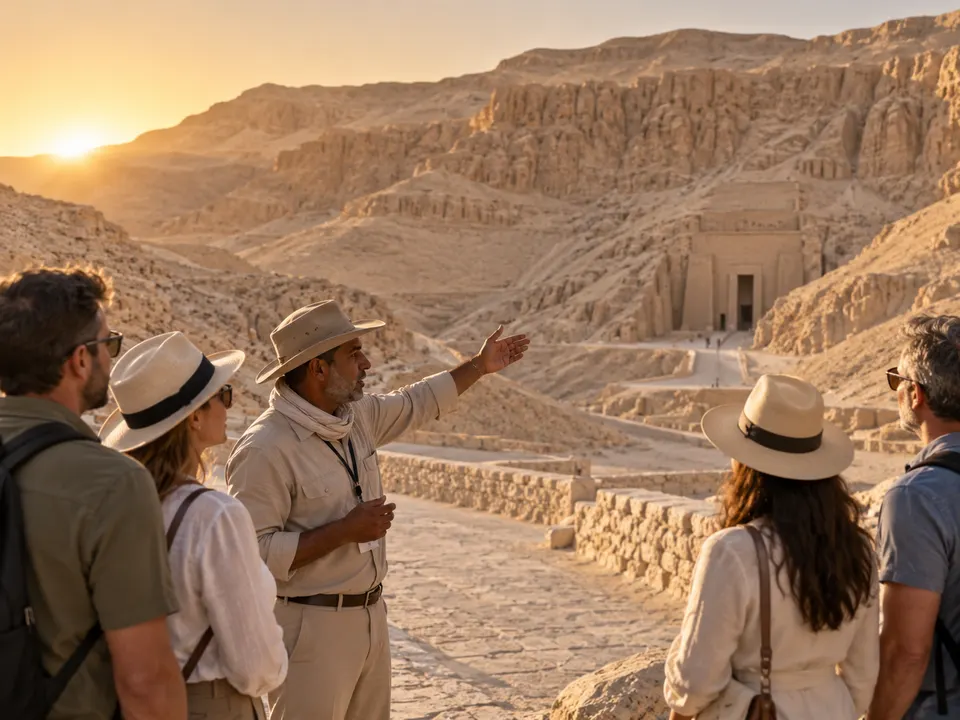
El Valle de los Reyes, en la orilla oeste de Luxor, alberga las tumbas de los faraones de las dinastías XVIII a XX (c. 1550 a 1070 a. C.), incluidos Tutankamón, Seti I y Ramsés VI. La entrada general (unas 750 EGP) abre tres tumbas de una lista rotatoria; Tutankamón (unas 700 EGP), Seti I (unas 2.000 EGP) y Ramsés V/VI (unas 220 EGP) son aparte. Nuestras excursiones incluyen la entrada general y, en dos productos, Seti I y Tutankamón.
After the pyramids proved impossible to protect, the kings of the New Kingdom chose a hidden valley under a pyramid-shaped peak and cut their tombs into the limestone: a descending corridor, pillared halls and a burial chamber painted with the books of the underworld. Sixty-three tombs are known; Tutankhamun's, found by Howard Carter in November 1922, was the only one found nearly intact.
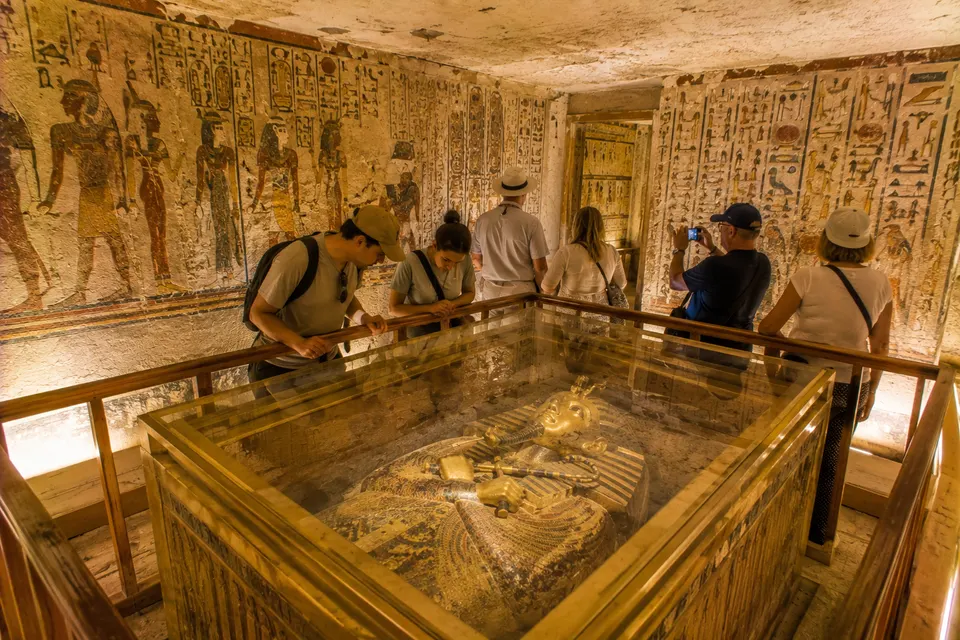
The tombs open with the general ticket rotate to protect the paint; the usual list includes Ramses IV with its astronomical ceiling, Ramses IX, Merenptah and Ramses III. Tutankhamun's tomb is small but holds the king himself. Seti I is the longest and most beautiful, reopened after decades of closure. Ramses V/VI has the complete Book of the Day and Night on its ceiling.
An electric train takes you from the ticket office to the valley floor. The tombs have ramps and wooden stairs and are warm inside; the best time is when the gate opens at 06:00.
Mejor época: De 06:00 a 08:30, en cualquier estación; de octubre a abril por la temperatura.

Luxor
Las dos orillas del Nilo en un día: las tumbas de los faraones por la mañana, los grandes templos por la tarde.

Luxor
La tumba más bella del valle y la más famosa, ambas incluidas, más tres con la entrada general.