El Cairo clásico4.8
El Cairo
Museo Egipcio, Ciudadela, bazar Khan El Khalili y El Cairo antiguo
Cinco mil años en un día: faraones en Tahrir, la ciudadela de Saladino, la Iglesia Colgante y el bazar.
9 hPrivado
85 €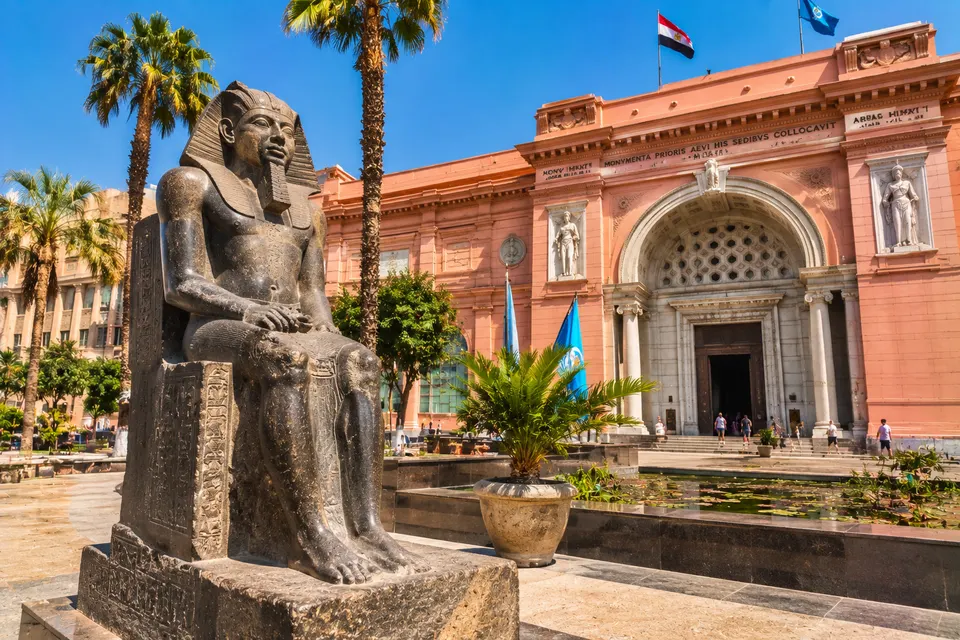
El museo de los faraones de 1902 y el nuevo hogar de las momias reales en Fustat.
El Museo Egipcio de la plaza Tahrir (1902) guarda 120.000 objetos: la paleta de Narmer, las estatuas del Imperio Antiguo, la galería de Amarna. Los tesoros de Tutankamón se trasladaron al Gran Museo Egipcio y las momias reales al Museo Nacional de la Civilización Egipcia (NMEC) en Fustat en 2021. Entradas unas 550 EGP cada una; nuestros días en El Cairo incluyen uno de los dos museos con un egiptólogo.
The neoclassical building on Tahrir Square is the oldest purpose-built museum in the Middle East, and although its two most famous collections have moved, it remains the best place in the world for the art of the Old Kingdom: the seated Khafre in diorite, the wooden Sheikh el-Balad, the painted Rahotep and Nofret, the Meidum geese. The Amarna gallery upstairs shows Akhenaten, Nefertiti and their daughters.
The National Museum of Egyptian Civilization sits by the lake of Ain El Sira in Fustat, the first Islamic capital. Its main hall tells the story of Egypt through crafts and daily life; below it, the Royal Mummies Hall, designed like a tomb, holds twenty kings and queens moved here from Tahrir in the Pharaohs' Golden Parade of April 2021. Ramses II, Seti I and Hatshepsut lie in separate chambers.
Our Cairo days pair either museum with the Citadel, Coptic Cairo and Khan El Khalili. The museum comes first in the morning, when the galleries are quiet.
Mejor época: Las mañanas entre semana. Los viernes y sábados se llenan de familias cairotas.