Orilla este5.0
Luxor
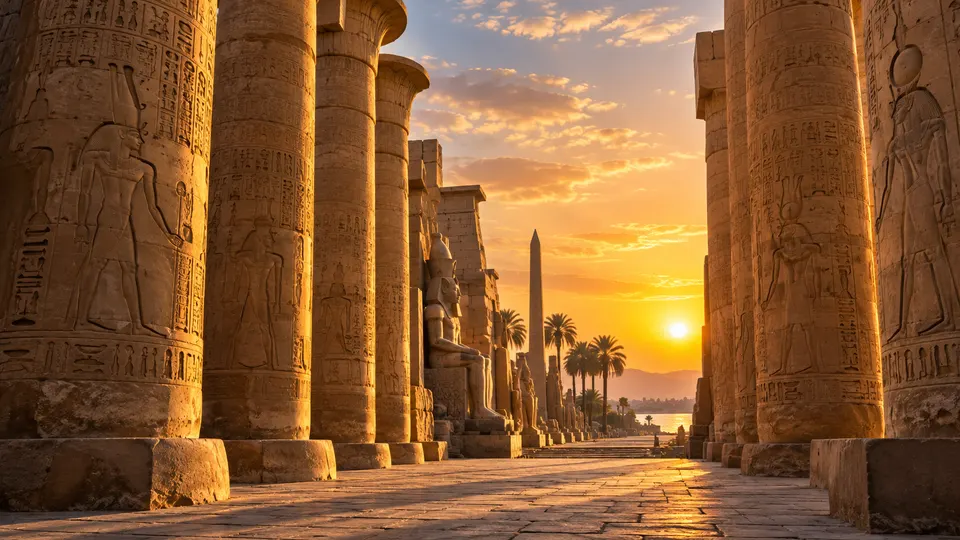
Templos de Karnak y Luxor: medio día privado
Los dos grandes templos de la orilla este en cuatro horas, por la mañana o a última hora de la tarde.
4 hPrivado
45 €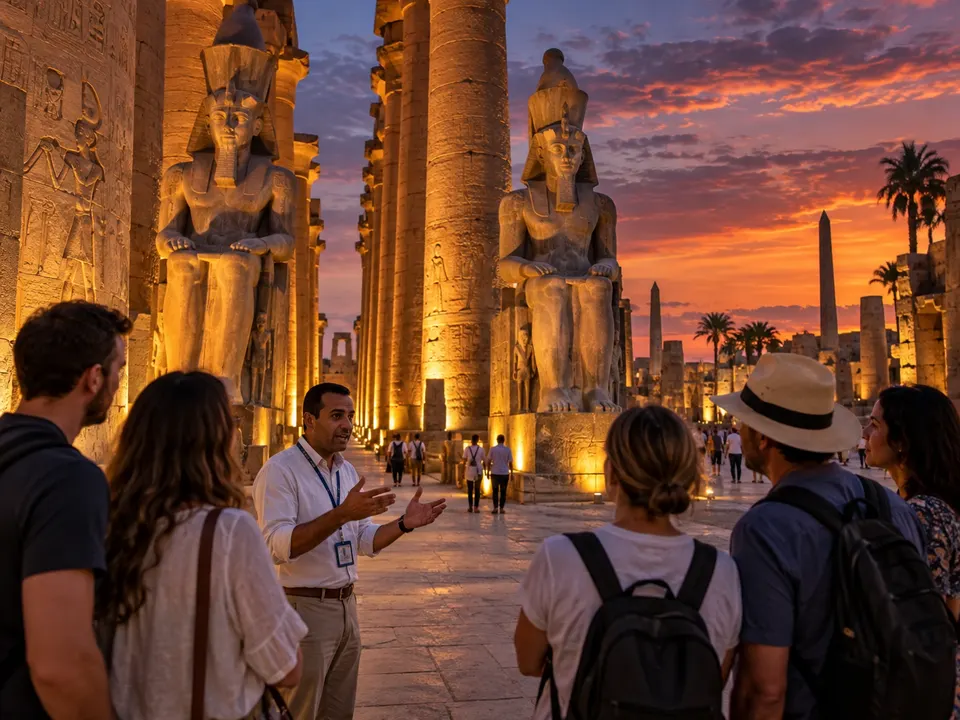
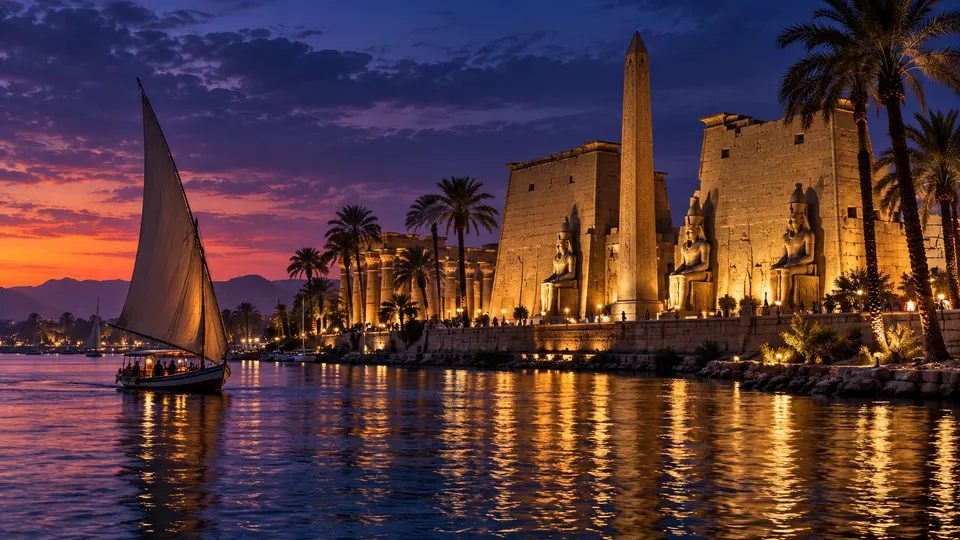
El templo de Amenhotep III en pleno centro, mejor cuando se encienden las luces.
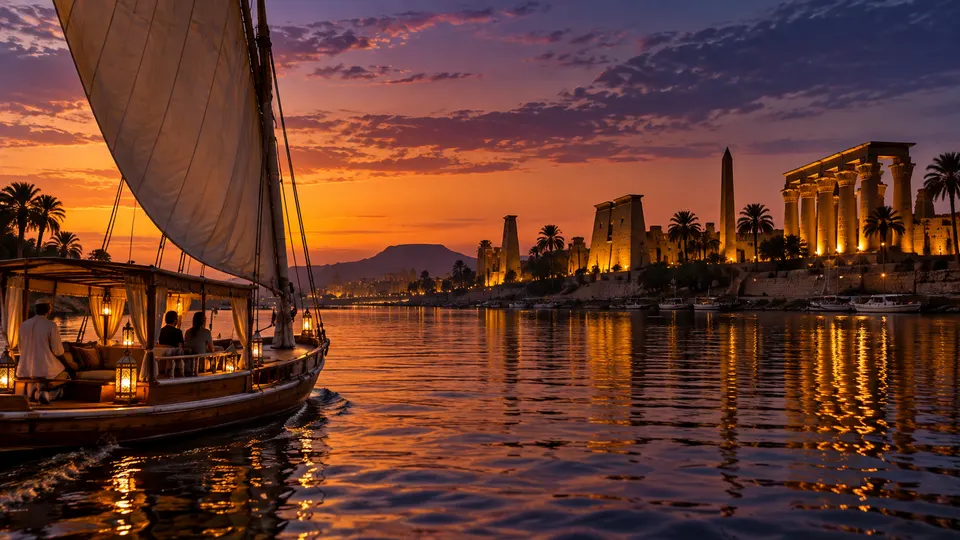
El templo de Luxor fue construido por Amenhotep III hacia 1390 a. C. y completado por Tutankamón y Ramsés II, cuyo pilono y obelisco único (su gemelo está en París) forman la fachada. La mezquita de Abu el-Haggag se alza en su interior y una capilla romana al fondo. Una hora con guía; entrada unas 500 EGP; abierto hasta las 21:00, iluminado tras la puesta de sol. Incluido en nuestro día en Luxor y en el medio día de la orilla este.
Luxor Temple was the "southern sanctuary" where the statue of Amun came from Karnak every year for the Opet festival along the Avenue of Sphinxes. Ramses II added the pylon with his colossi and the two obelisks, one given to France in 1833. Behind the courtyard runs the colonnade of Amenhotep III, carved with the Opet procession under Tutankhamun.
The temple was never abandoned: the Romans made it a fort and painted a chapel to the emperors in the sanctuary; the Copts built churches in the courtyards; the mosque of Abu Haggag, built on the rubble in the 13th century, still stands on top of the Ramses court with its door six metres above the ancient floor.
It is small enough for an hour and at its best when the sun has gone and the stones are lit. Our afternoon East Bank tour and the felucca sails are timed for that.
Mejor época: El crepúsculo, en cualquier estación.
Luxor
Los dos grandes templos de la orilla este en cuatro horas, por la mañana o a última hora de la tarde.
Luxor
Las dos orillas del Nilo en un día: las tumbas de los faraones por la mañana, los grandes templos por la tarde.