Luxor
Luxor día completo: Valle de los Reyes, templo de Hatshepsut, Colosos de Memnón, Karnak y templo de Luxor
Las dos orillas del Nilo en un día: las tumbas de los faraones por la mañana, los grandes templos por la tarde.

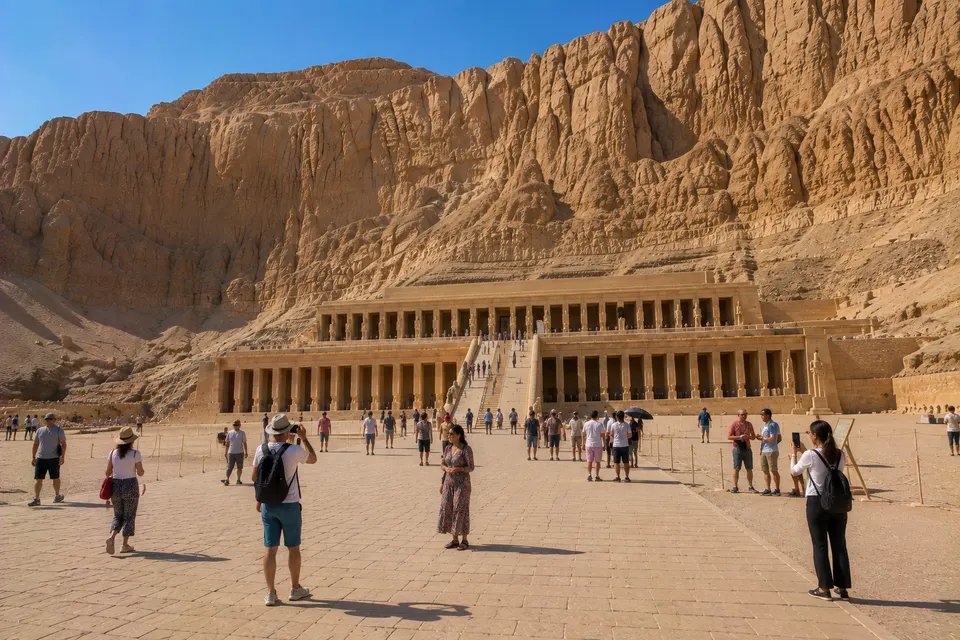
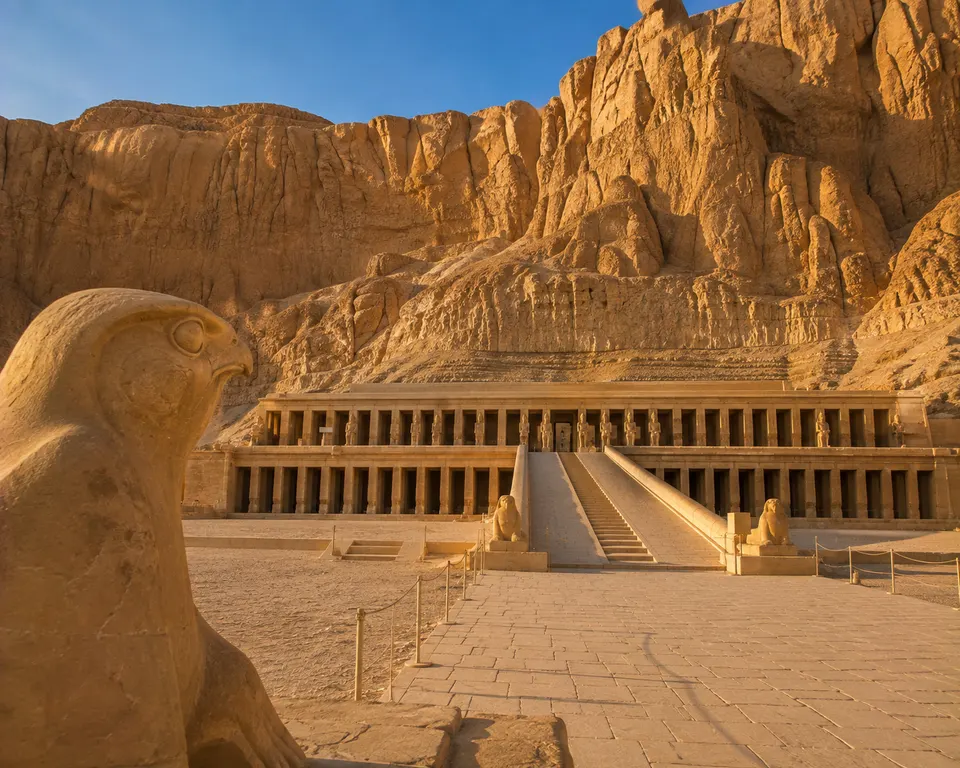
El templo en terrazas de la mujer que reinó como faraón, bajo el acantilado de Deir el-Bahari.
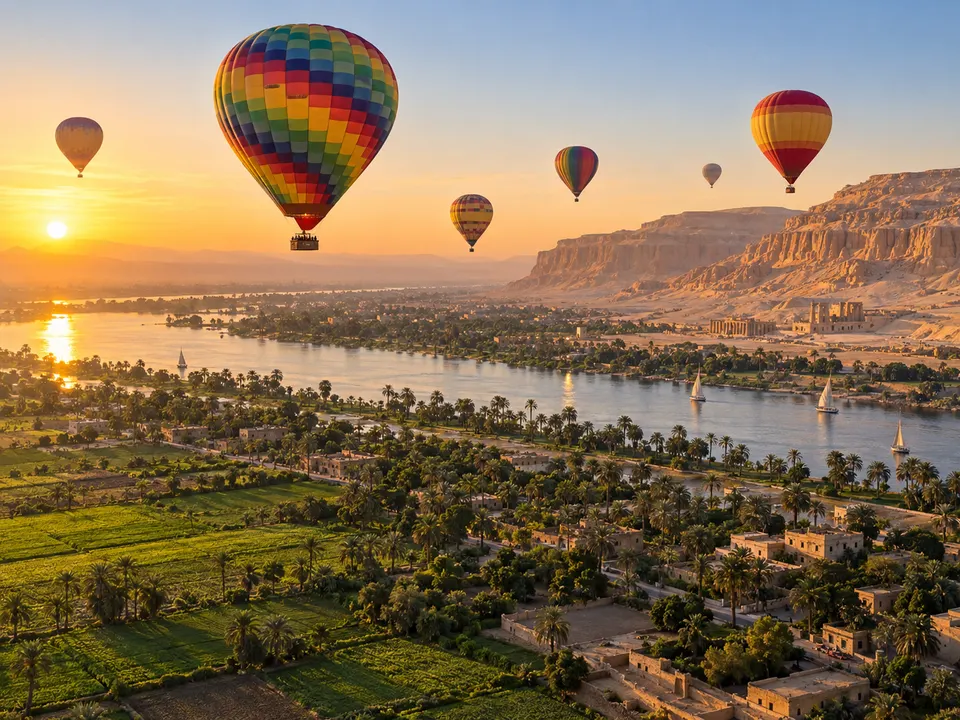
El templo de Hatshepsut en Deir el-Bahari (c. 1479 a 1458 a. C., arquitecto Senenmut) se alza en tres terrazas con columnatas contra el acantilado de la montaña tebana, con los relieves de la expedición a Punt y la capilla de Hathor. Los Colosos de Memnón, las dos estatuas de 18 m de Amenhotep III, se levantan en el camino hacia él. Ambos están en todas las excursiones por la orilla oeste; el globo los sobrevuela al amanecer.
Hatshepsut ruled Egypt for twenty years as pharaoh in her own right, and her mortuary temple is unlike any other: three terraces of columns climbing the cliff at Deir el-Bahari next to the Middle Kingdom temple of Mentuhotep II, aligned on Karnak across the river. The upper terrace was restored by a Polish mission over fifty years.
The reliefs on the middle terrace tell the expedition she sent to the land of Punt (probably Eritrea or Somalia) for incense trees, with the fat queen of Punt and the fish of the Red Sea, and the story of her divine birth by Amun. The chapels of Hathor and Anubis keep their colour. Her successor Thutmose III chiselled out her name; the archaeologists put it back.
The Colossi of Memnon on the road are all that stands of the largest temple in Thebes, that of Amenhotep III. After an earthquake in 27 BC the northern statue "sang" at dawn and the Greeks and Romans came to hear it; Septimius Severus repaired it and the singing stopped.
Mejor época: A primera hora de la mañana; los globos pasan entre las 06:00 y las 07:00.

Luxor
Las dos orillas del Nilo en un día: las tumbas de los faraones por la mañana, los grandes templos por la tarde.