Traslado-excursión de ida4.9
Luxor
Excursión privada de Luxor a Asuán: templos de Esna, Edfu y Kom Ombo
La carretera del Nilo hacia el sur con los tres templos en los que paran los cruceros, terminando en Asuán.
10 hPrivado
120 €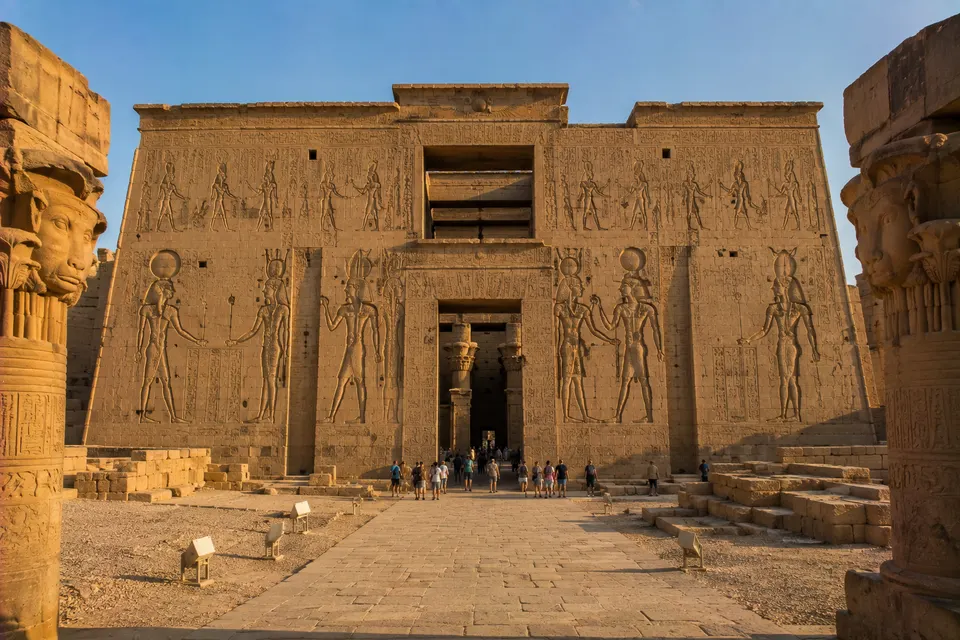
Los templos ptolemaicos entre Luxor y Asuán, completos del suelo al techo.
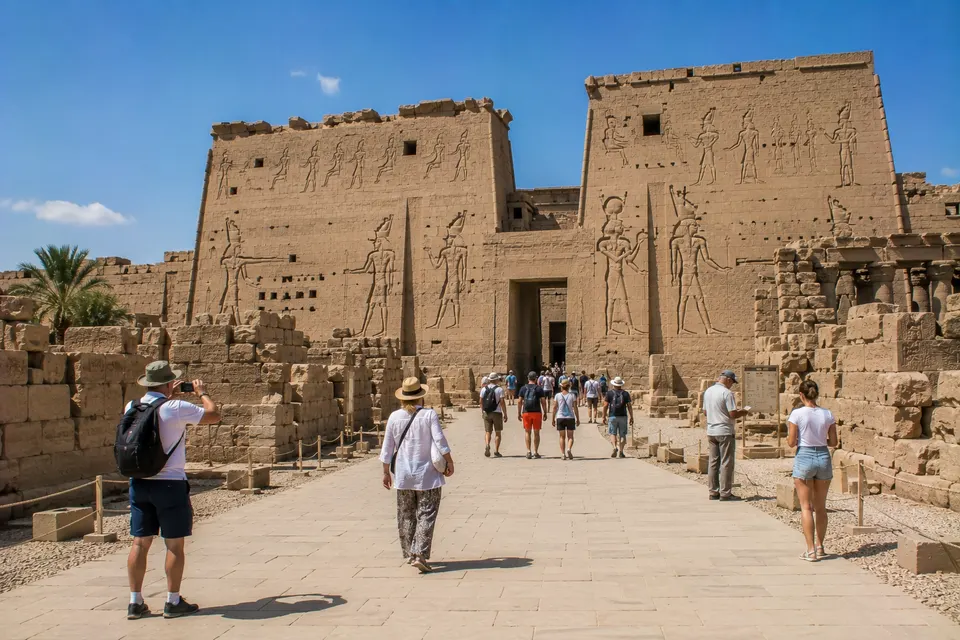
Entre Luxor y Asuán se conservan casi intactos tres templos tardíos: el templo de Jnum en Esna (sala hipóstila romana por debajo del nivel de la calle), el templo de Horus en Edfu (237 a 57 a. C., el mejor conservado de Egipto) y el templo doble de Sobek y Horus en Kom Ombo con su museo de los cocodrilos. Los cruceros por el Nilo paran en los tres; en coche privado forman un traslado-excursión de diez horas de Luxor a Asuán.
The Ptolemies built in the old style but with a complete plan, and because these temples were buried in silt and villages until the 19th century, they kept their roofs and their reliefs. Edfu is the model: the tallest pylon after Karnak, a courtyard, two hypostyle halls, the sanctuary with the granite shrine of Nectanebo, and the walls carved with the myth of Horus defeating Seth in the form of a hippopotamus.
Kom Ombo sits on a bend of the Nile with two of everything: two entrances, two sanctuaries, one side for the crocodile god Sobek and one for Horus the Elder. The relief of surgical instruments on the rear wall and the Nilometer are the famous details; the crocodile museum next door shows the mummified animals from the temple's sacred lake.
Esna's temple survives only as its hypostyle hall, nine metres below the street of the modern town, with columns whose capitals are all different and a ceiling cleaned in the 2020s to its original colour.
Mejor época: De octubre a abril.