Cel mai vândut4.9
Luxor
Luxor o zi întreagă: Valea Regilor, Templul lui Hatshepsut, Colosii lui Memnon, Karnak și Templul Luxor
Ambele maluri ale Nilului într-o zi: mormintele faraonilor dimineața, marile temple după-amiaza.
8 hPrivat
75 EUR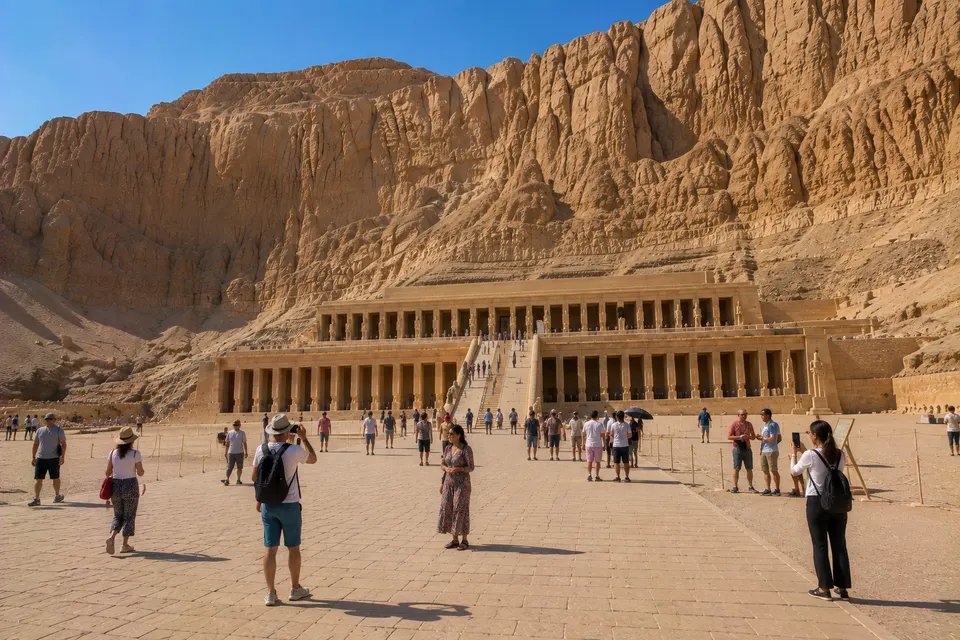
Templul în terase al femeii care a domnit ca rege, sub stânca de la Deir el-Bahari.
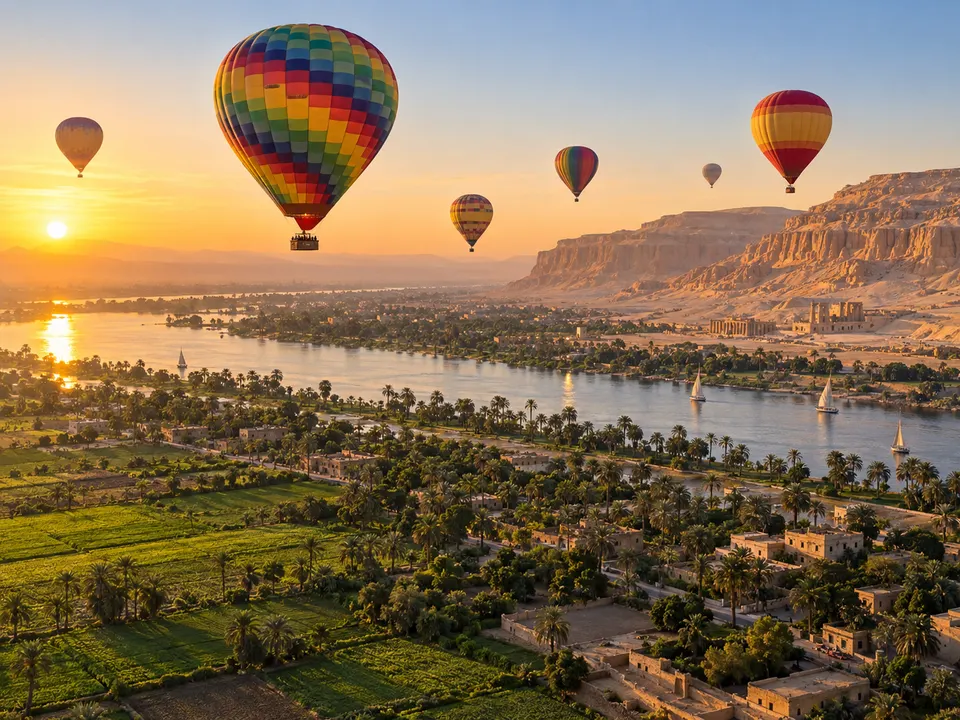
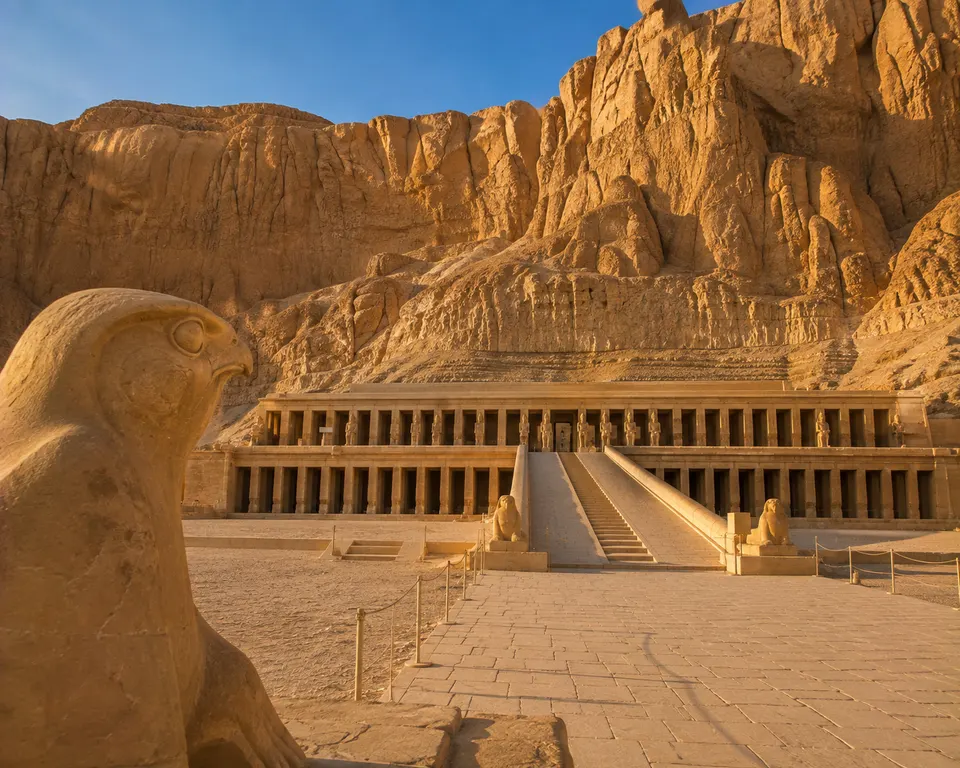
Templul lui Hatshepsut de la Deir el-Bahari (cca 1479–1458 î.Hr., arhitect Senenmut) se înalță în trei terase cu colonade pe fundalul stâncii muntelui teban, cu reliefurile expediției în Punt și capela lui Hathor. Colosii lui Memnon, cele două statui de 18 m ale lui Amenhotep III, stau pe drumul spre el. Ambele sunt în fiecare excursie pe malul vestic; balonul zboară deasupra lor la răsărit.
Hatshepsut ruled Egypt for twenty years as pharaoh in her own right, and her mortuary temple is unlike any other: three terraces of columns climbing the cliff at Deir el-Bahari next to the Middle Kingdom temple of Mentuhotep II, aligned on Karnak across the river. The upper terrace was restored by a Polish mission over fifty years.
The reliefs on the middle terrace tell the expedition she sent to the land of Punt (probably Eritrea or Somalia) for incense trees, with the fat queen of Punt and the fish of the Red Sea, and the story of her divine birth by Amun. The chapels of Hathor and Anubis keep their colour. Her successor Thutmose III chiselled out her name; the archaeologists put it back.
The Colossi of Memnon on the road are all that stands of the largest temple in Thebes, that of Amenhotep III. After an earthquake in 27 BC the northern statue "sang" at dawn and the Greeks and Romans came to hear it; Septimius Severus repaired it and the singing stopped.
Cea mai bună perioadă: Dimineața devreme; baloanele zboară deasupra între 06:00 și 07:00.
Luxor
Ambele maluri ale Nilului într-o zi: mormintele faraonilor dimineața, marile temple după-amiaza.