Bestseller4.9
Luxor
Luxor hele dag: Vallei der Koningen, Hatsjepsoet-tempel, Kolossen van Memnon, Karnak en Luxor-tempel
Beide oevers van de Nijl op één dag: de graven van de farao's in de ochtend, de grote tempels in de middag.
8 uurPrivé
€ 75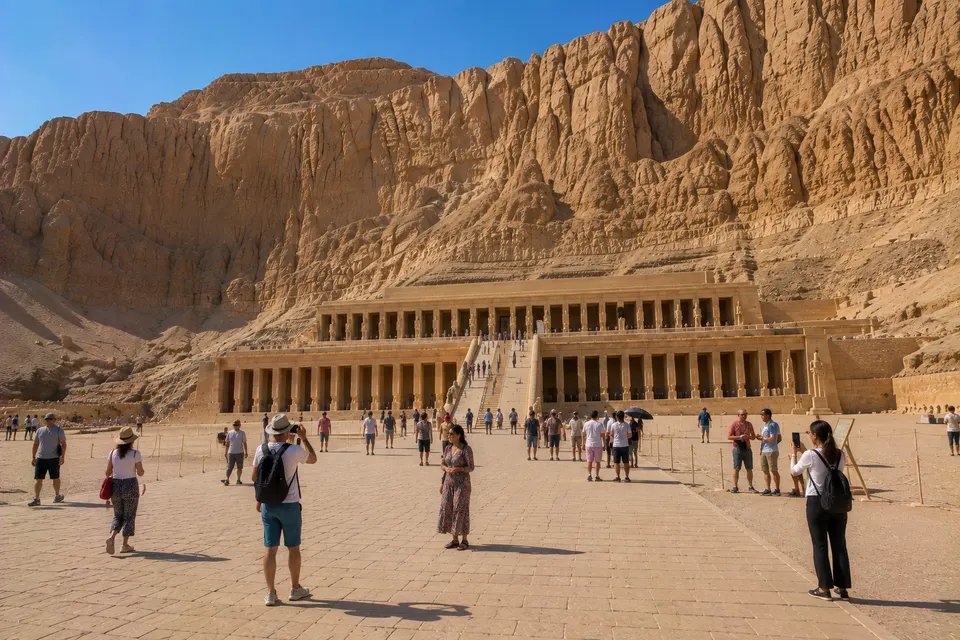
De terrastempel van de vrouw die als koning regeerde, onder de rotswand van Deir el-Bahari.
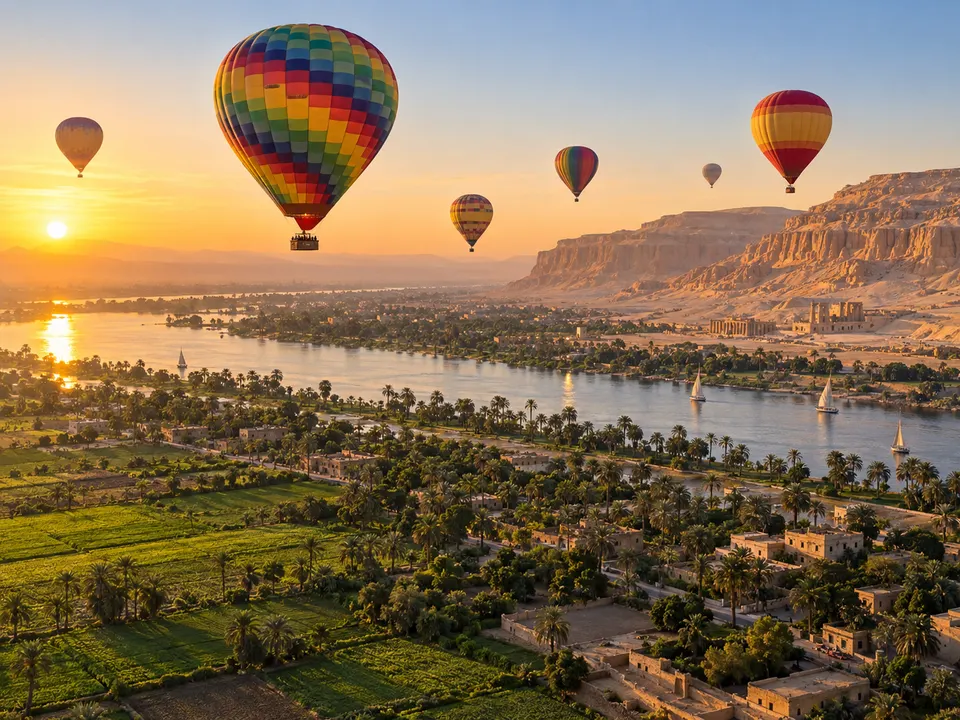
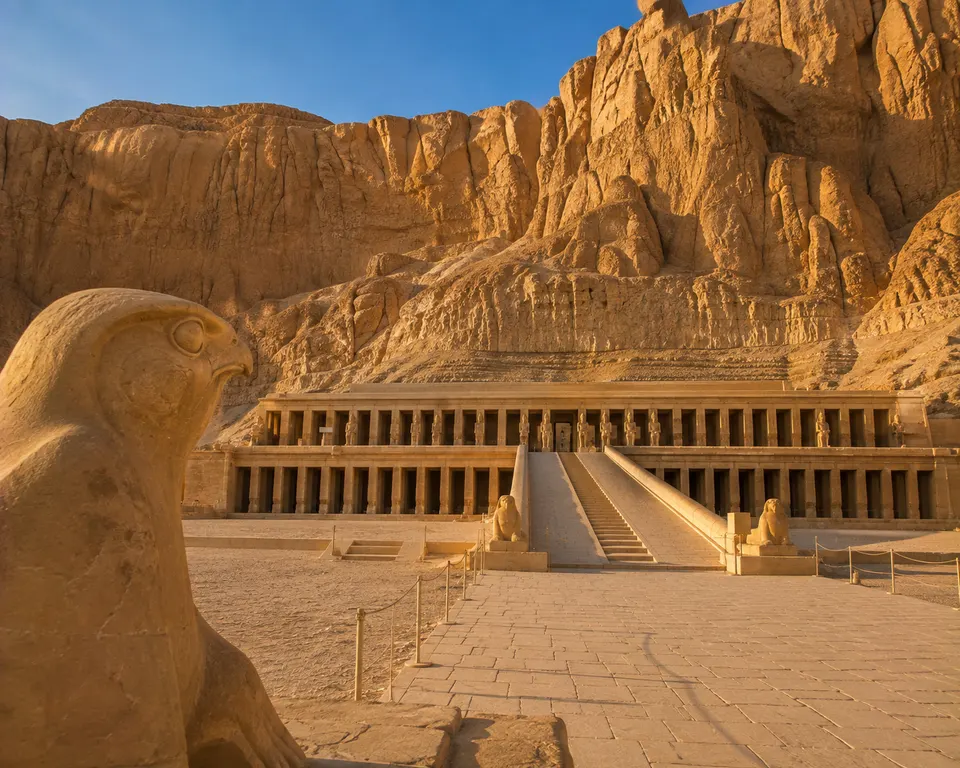
De Hatsjepsoet-tempel in Deir el-Bahari (ca. 1479 tot 1458 v.Chr., architect Senenmoet) rijst in drie zuilenterrassen op tegen de rotswand van het Thebaanse gebergte, met de reliëfs van de expeditie naar Poent en de Hathor-kapel. De Kolossen van Memnon, de twee 18 m hoge beelden van Amenhotep III, staan langs de weg ernaartoe. Beide zijn op elke westoever-excursie; de ballon vliegt er bij zonsopgang overheen.
Hatshepsut ruled Egypt for twenty years as pharaoh in her own right, and her mortuary temple is unlike any other: three terraces of columns climbing the cliff at Deir el-Bahari next to the Middle Kingdom temple of Mentuhotep II, aligned on Karnak across the river. The upper terrace was restored by a Polish mission over fifty years.
The reliefs on the middle terrace tell the expedition she sent to the land of Punt (probably Eritrea or Somalia) for incense trees, with the fat queen of Punt and the fish of the Red Sea, and the story of her divine birth by Amun. The chapels of Hathor and Anubis keep their colour. Her successor Thutmose III chiselled out her name; the archaeologists put it back.
The Colossi of Memnon on the road are all that stands of the largest temple in Thebes, that of Amenhotep III. After an earthquake in 27 BC the northern statue "sang" at dawn and the Greeks and Romans came to hear it; Septimius Severus repaired it and the singing stopped.
Beste tijd: Vroege ochtend; de ballonnen vliegen over tussen 06:00 en 07:00.
Luxor
Beide oevers van de Nijl op één dag: de graven van de farao's in de ochtend, de grote tempels in de middag.