Bestseller4.9
Luxor
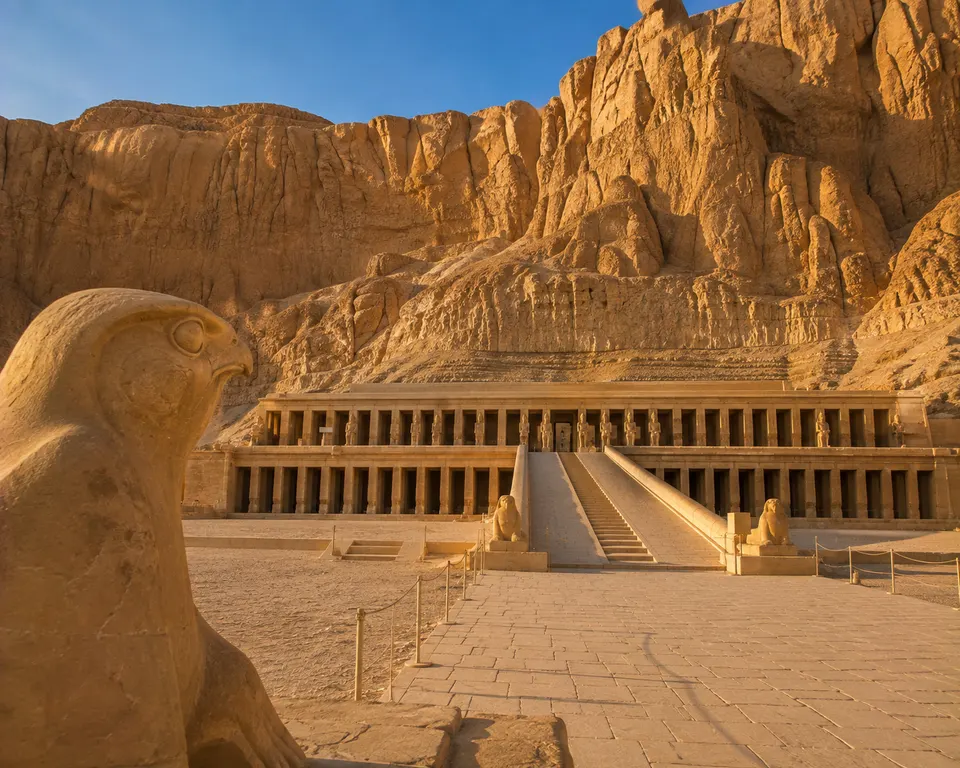
Luxor Ganztagestour: Tal der Könige, Hatschepsut-Tempel, Memnonkolosse, Karnak und Luxor-Tempel
Beide Nilufer an einem Tag: morgens die Gräber der Pharaonen, nachmittags die großen Tempel.
8 Std.Privat
75 €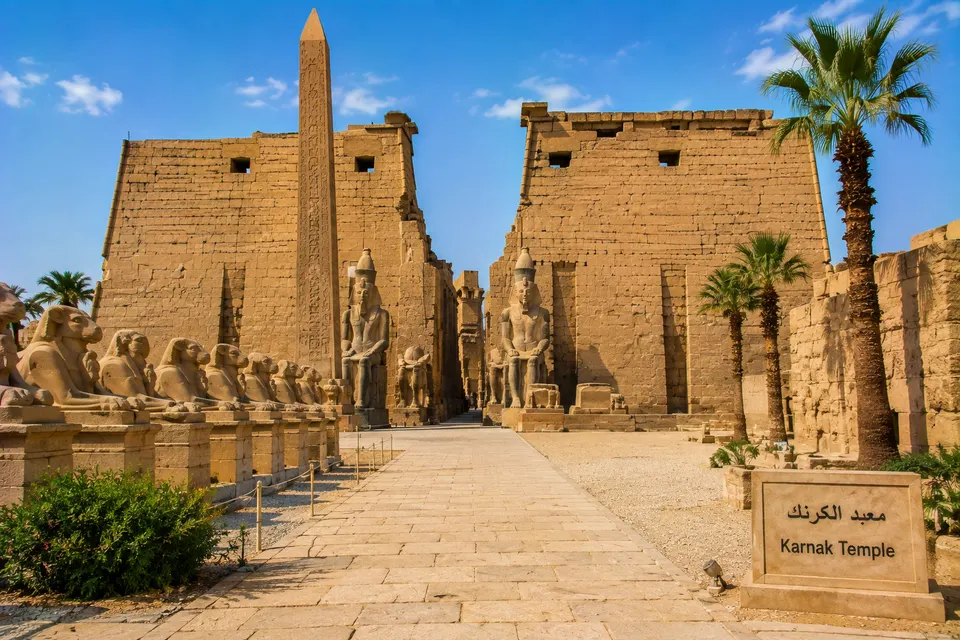
Das größte je gebaute religiöse Bauwerk, 2.000 Jahre im Entstehen.
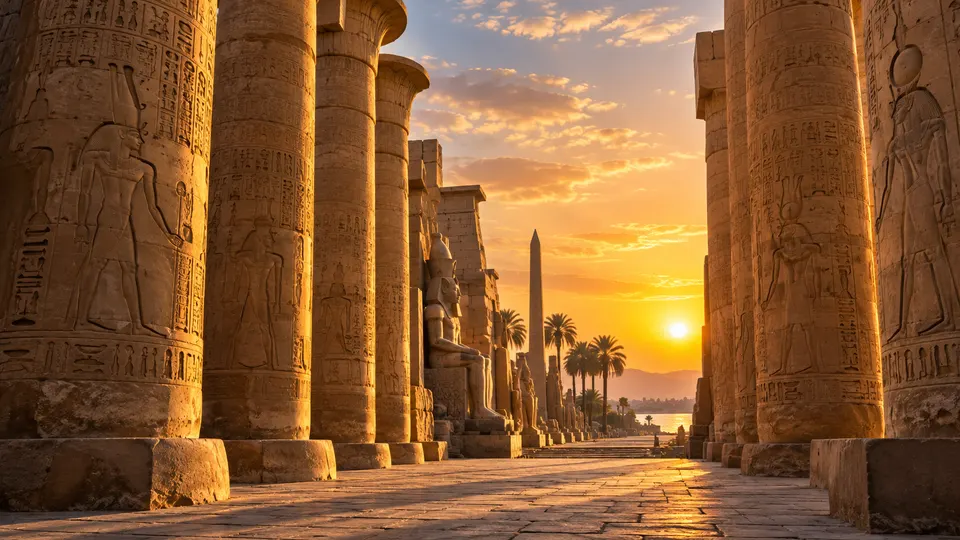
Karnak ist der Tempel des Amun in Theben, von etwa 2055 v. Chr. bis zu den Ptolemäern auf 100 Hektar gebaut und erweitert: die Große Säulenhalle mit 134 Säulen, die Obelisken der Hatschepsut und Thutmosis’ III., der heilige See und die Sphingenallee zum Luxor-Tempel. Zwei Stunden mit Guide; Ticket etwa 600 EGP; die Ton-und-Licht-Show läuft am Abend. Bei jeder Luxor-Tagestour inklusive.
Every pharaoh of the New Kingdom added to Karnak, so walking from the first pylon to the sanctuary is walking backwards in time. The Avenue of Ram-headed Sphinxes leads through the pylon of the last dynasty into the courtyard, then the Great Hypostyle Hall: twelve central columns 21 m high with open papyrus capitals, 122 smaller ones around them, all carved and once painted.
Beyond the hall stand the obelisks of Thutmose I and Hatshepsut, the sanctuary of the sacred bark, the Festival Hall of Thutmose III with its tent-pole columns, and the sacred lake where the priests washed before dawn. The open-air museum keeps the reconstructed White Chapel of Senusret I and the Red Chapel of Hatshepsut.
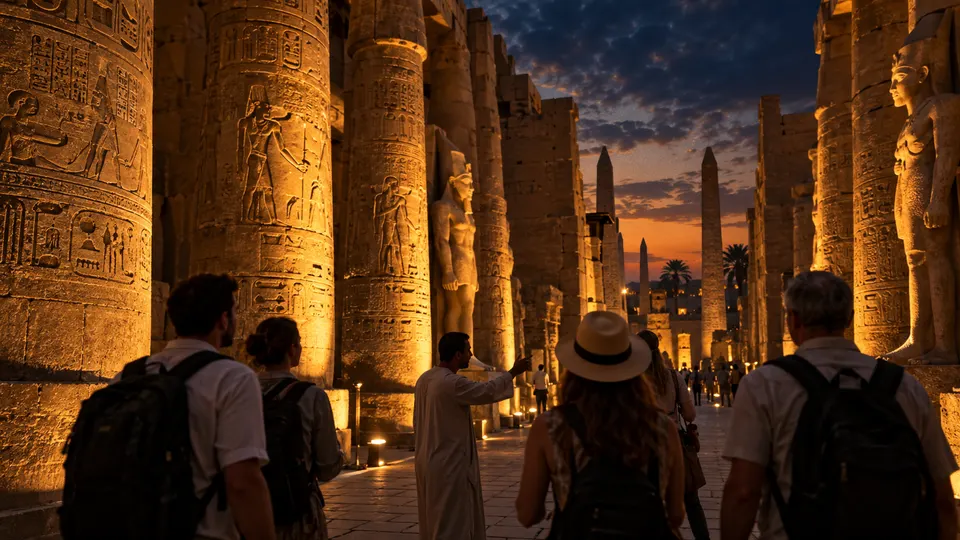
At night the Sound and Light Show leads you through the same route with the columns lit from below; by day the site opens at 06:00 and the first hour is the quietest.
Beste Zeit: Früh am Morgen oder ab 15:00; Oktober bis April wegen der Hitze.
Luxor
Beide Nilufer an einem Tag: morgens die Gräber der Pharaonen, nachmittags die großen Tempel.