Bestseller4.9
Luxor
Luxor Ganztagestour: Tal der Könige, Hatschepsut-Tempel, Memnonkolosse, Karnak und Luxor-Tempel
Beide Nilufer an einem Tag: morgens die Gräber der Pharaonen, nachmittags die großen Tempel.
8 Std.Privat
75 €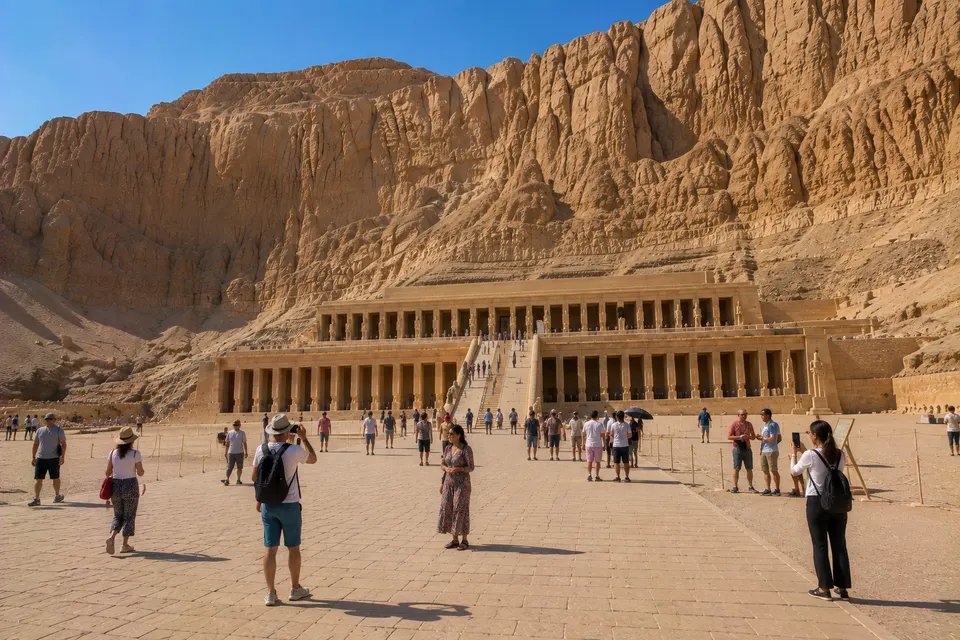
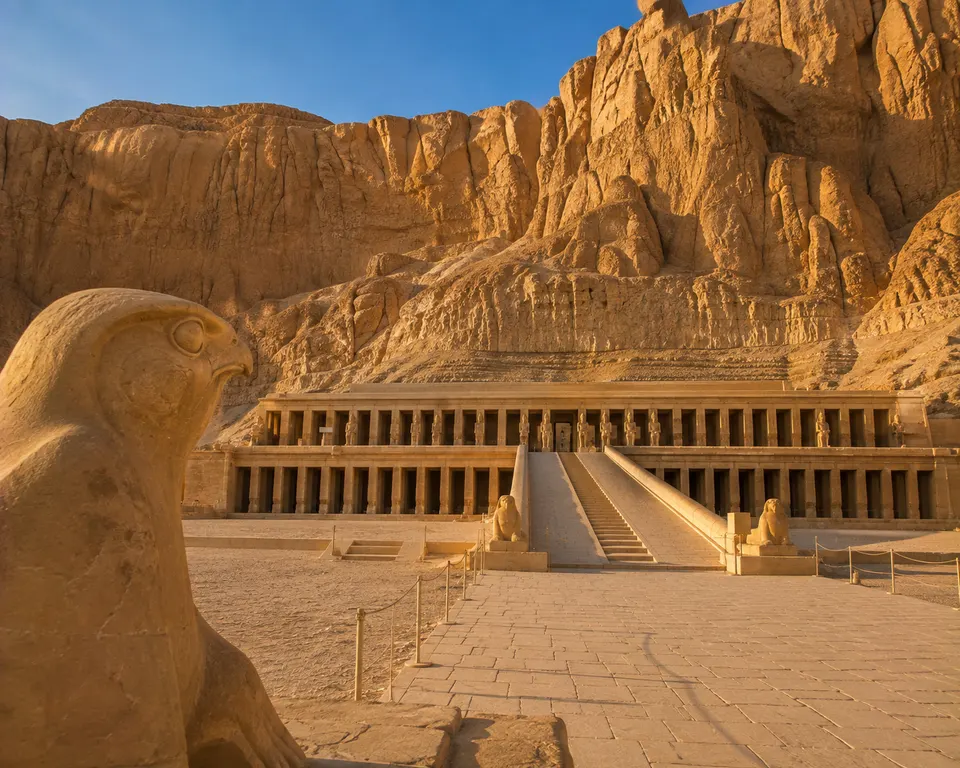
Der Terrassentempel der Frau, die als König regierte, unter der Felswand von Deir el-Bahari.
Der Hatschepsut-Tempel in Deir el-Bahari (um 1479 bis 1458 v. Chr., Architekt Senenmut) erhebt sich in drei Säulenterrassen vor der Felswand des thebanischen Gebirges, mit den Reliefs der Expedition nach Punt und der Hathor-Kapelle. Die Memnonkolosse, die beiden 18 m hohen Statuen Amenophis’ III., stehen an der Straße dorthin. Beide gehören zu jeder Westufer-Tour; der Ballon fliegt bei Sonnenaufgang darüber.
Hatshepsut ruled Egypt for twenty years as pharaoh in her own right, and her mortuary temple is unlike any other: three terraces of columns climbing the cliff at Deir el-Bahari next to the Middle Kingdom temple of Mentuhotep II, aligned on Karnak across the river. The upper terrace was restored by a Polish mission over fifty years.
The reliefs on the middle terrace tell the expedition she sent to the land of Punt (probably Eritrea or Somalia) for incense trees, with the fat queen of Punt and the fish of the Red Sea, and the story of her divine birth by Amun. The chapels of Hathor and Anubis keep their colour. Her successor Thutmose III chiselled out her name; the archaeologists put it back.
The Colossi of Memnon on the road are all that stands of the largest temple in Thebes, that of Amenhotep III. After an earthquake in 27 BC the northern statue "sang" at dawn and the Greeks and Romans came to hear it; Septimius Severus repaired it and the singing stopped.
Beste Zeit: Früh am Morgen; die Ballons fliegen zwischen 06:00 und 07:00 darüber.
Luxor
Beide Nilufer an einem Tag: morgens die Gräber der Pharaonen, nachmittags die großen Tempel.