Einfache Transfer-Tour4.9
Luxor
Private Tour von Luxor nach Assuan: Tempel von Esna, Edfu und Kom Ombo
Die Nilstraße nach Süden mit den drei Tempeln, an denen die Kreuzfahrtschiffe halten, mit Ziel Assuan.
10 Std.Privat
120 €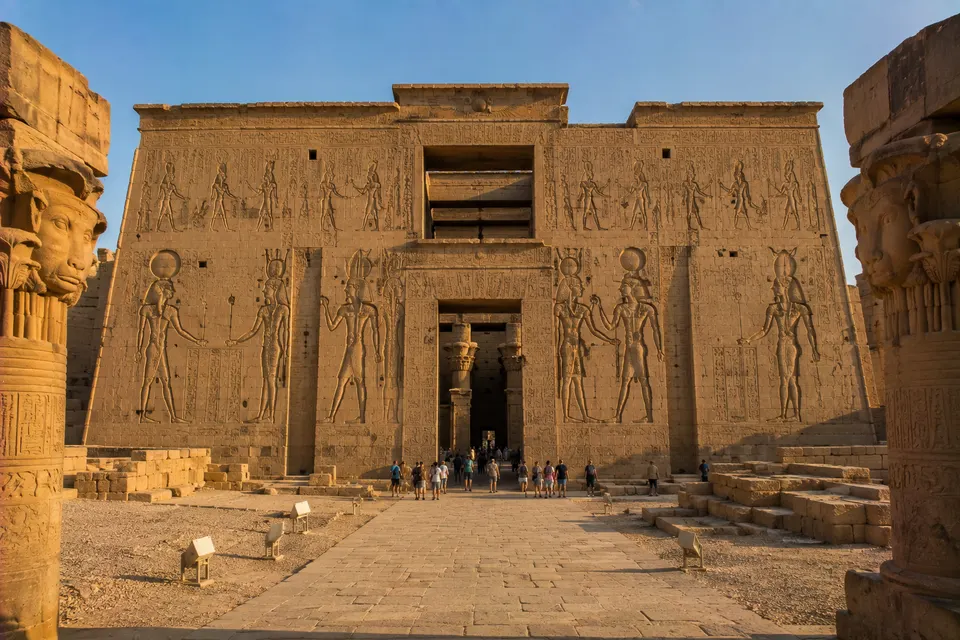
Die ptolemäischen Tempel zwischen Luxor und Assuan, vom Boden bis zum Dach erhalten.
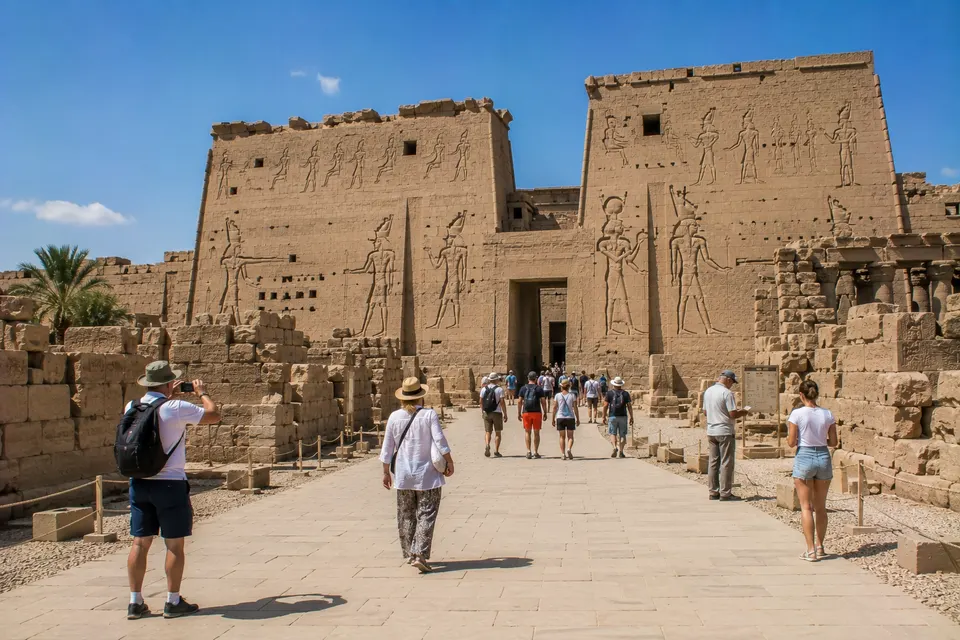
Zwischen Luxor und Assuan stehen drei späte Tempel fast unversehrt: der Chnum-Tempel von Esna (römische Säulenhalle unter Straßenniveau), der Horus-Tempel von Edfu (237 bis 57 v. Chr., der besterhaltene Ägyptens) und der Doppeltempel von Sobek und Horus in Kom Ombo mit seinem Krokodilmuseum. Nilkreuzfahrten halten an allen dreien; im Privatwagen ergeben sie eine zehnstündige Transfer-Tour von Luxor nach Assuan.
The Ptolemies built in the old style but with a complete plan, and because these temples were buried in silt and villages until the 19th century, they kept their roofs and their reliefs. Edfu is the model: the tallest pylon after Karnak, a courtyard, two hypostyle halls, the sanctuary with the granite shrine of Nectanebo, and the walls carved with the myth of Horus defeating Seth in the form of a hippopotamus.
Kom Ombo sits on a bend of the Nile with two of everything: two entrances, two sanctuaries, one side for the crocodile god Sobek and one for Horus the Elder. The relief of surgical instruments on the rear wall and the Nilometer are the famous details; the crocodile museum next door shows the mummified animals from the temple's sacred lake.
Esna's temple survives only as its hypostyle hall, nine metres below the street of the modern town, with columns whose capitals are all different and a ceiling cleaned in the 2020s to its original colour.
Beste Zeit: Oktober bis April.