Východní břeh5.0
Luxor
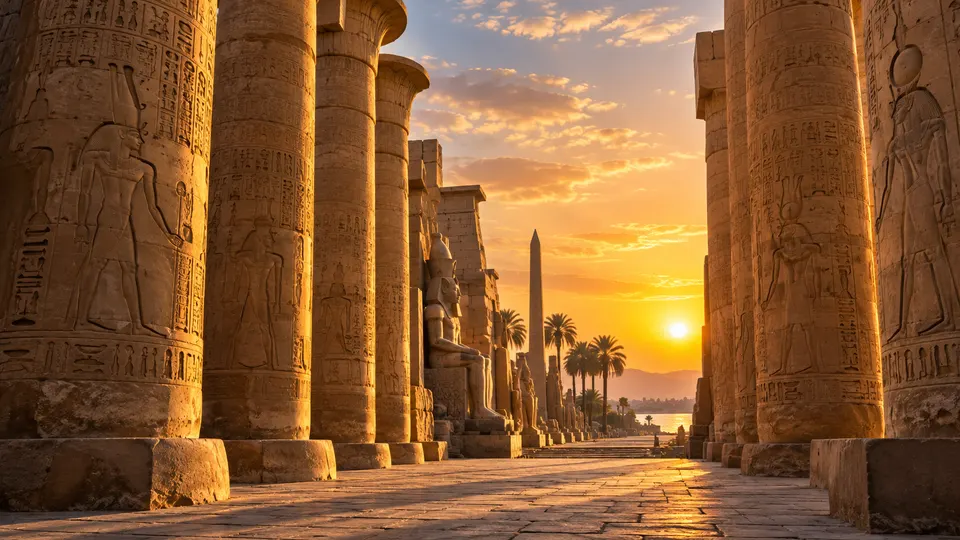
Chrámy v Karnaku a Luxoru: půldenní soukromý výlet
Dva velké chrámy východního břehu za čtyři hodiny, ráno nebo pozdě odpoledne.
4 hSoukromý
45 €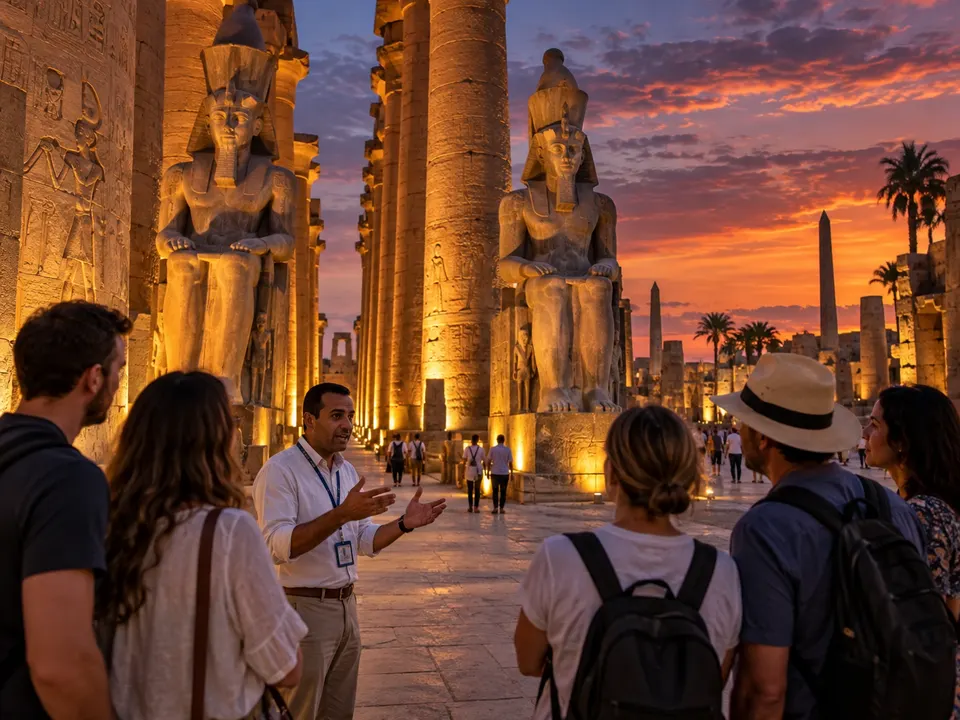
Chrám Amenhotepa III. uprostřed města, nejkrásnější, když se rozsvítí světla.
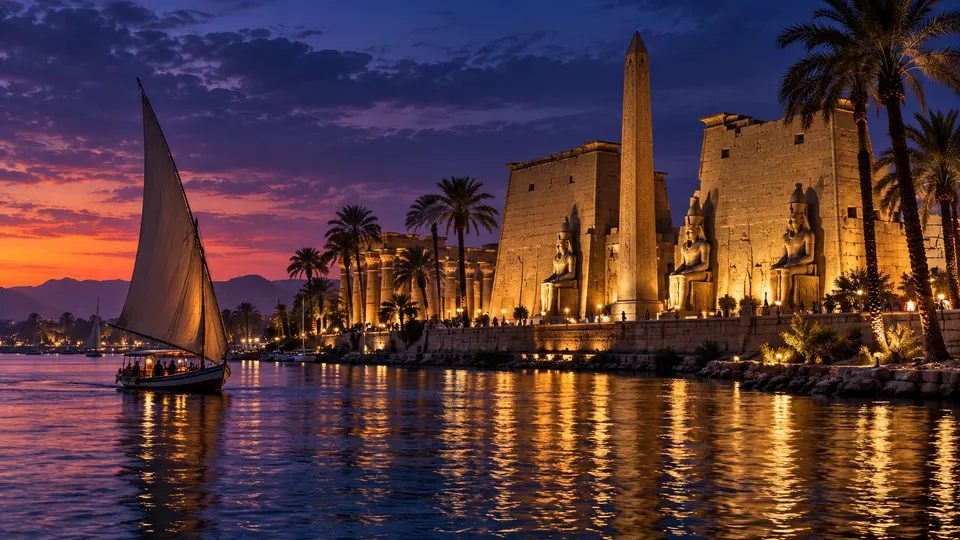
Luxorský chrám postavil Amenhotep III. kolem roku 1390 př. n. l. a dokončili ho Tutanchamon a Ramesse II., jehož pylon a jediný obelisk (jeho dvojče stojí v Paříži) tvoří průčelí. Uvnitř stojí mešita Abú Haggága a vzadu římská kaple. Hodina s průvodcem; vstupenka asi 500 EGP; otevřeno do 21:00, po setmění osvětleno. V ceně našeho luxorského dne a půldenního výletu po východním břehu.
Luxor Temple was the "southern sanctuary" where the statue of Amun came from Karnak every year for the Opet festival along the Avenue of Sphinxes. Ramses II added the pylon with his colossi and the two obelisks, one given to France in 1833. Behind the courtyard runs the colonnade of Amenhotep III, carved with the Opet procession under Tutankhamun.
The temple was never abandoned: the Romans made it a fort and painted a chapel to the emperors in the sanctuary; the Copts built churches in the courtyards; the mosque of Abu Haggag, built on the rubble in the 13th century, still stands on top of the Ramses court with its door six metres above the ancient floor.
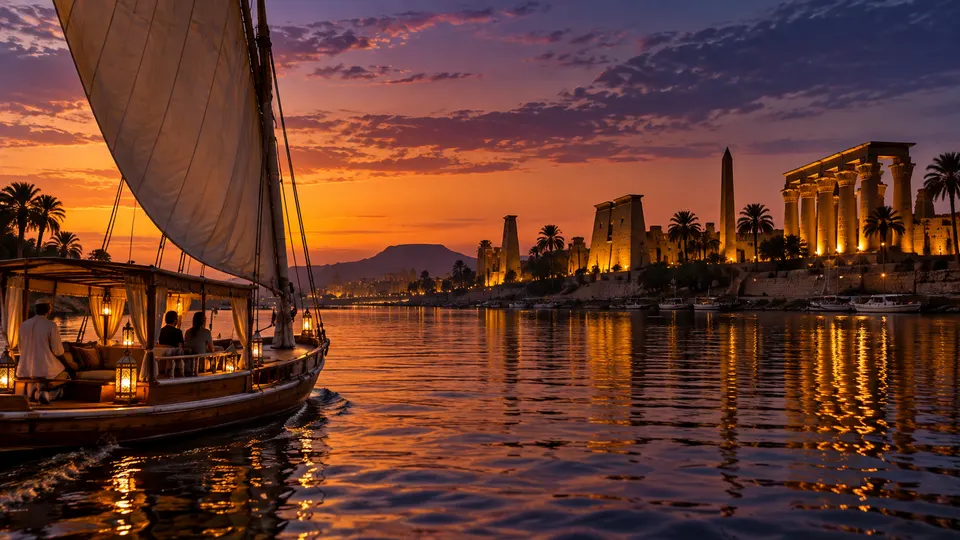
It is small enough for an hour and at its best when the sun has gone and the stones are lit. Our afternoon East Bank tour and the felucca sails are timed for that.
Nejlepší doba: Soumrak, v každém ročním období.
Luxor
Dva velké chrámy východního břehu za čtyři hodiny, ráno nebo pozdě odpoledne.
Luxor
Oba břehy Nilu za jeden den: dopoledne hrobky faraonů, odpoledne velké chrámy.