Bestseller4.9
Luxor
Luxor celý den: Údolí králů, chrám Hatšepsut, Memnonovy kolosy, Karnak a Luxorský chrám
Oba břehy Nilu za jeden den: dopoledne hrobky faraonů, odpoledne velké chrámy.
8 hSoukromý
75 €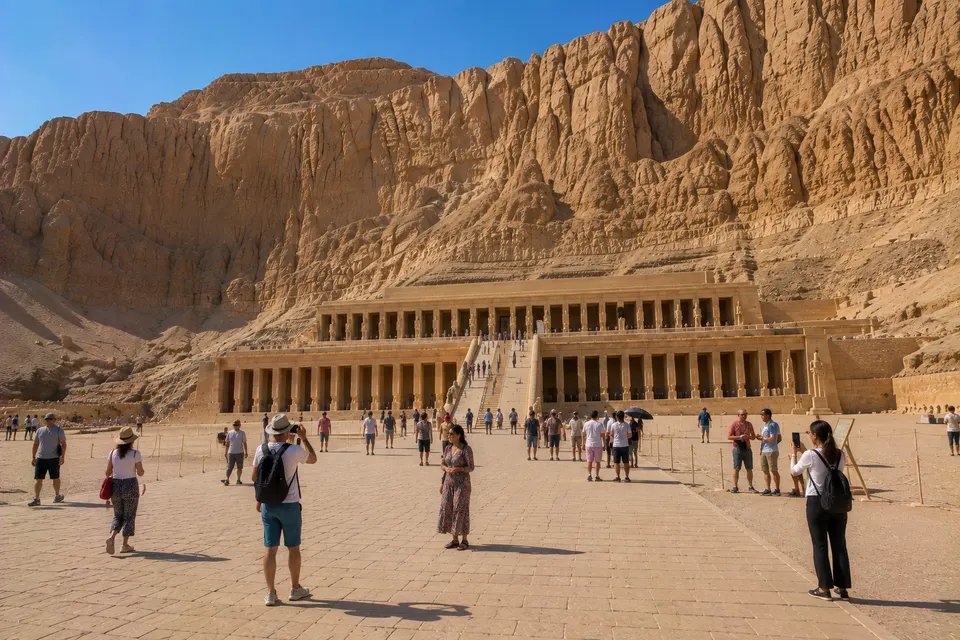
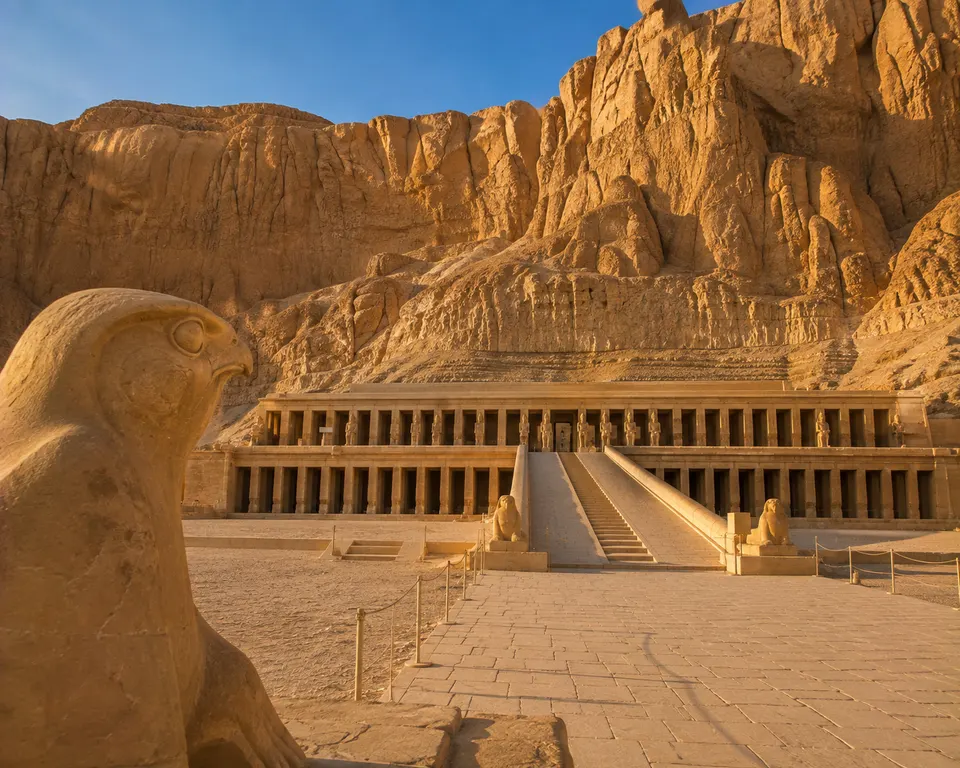
Terasovitý chrám ženy, která vládla jako král, pod skalní stěnou v Dér el-Bahrí.
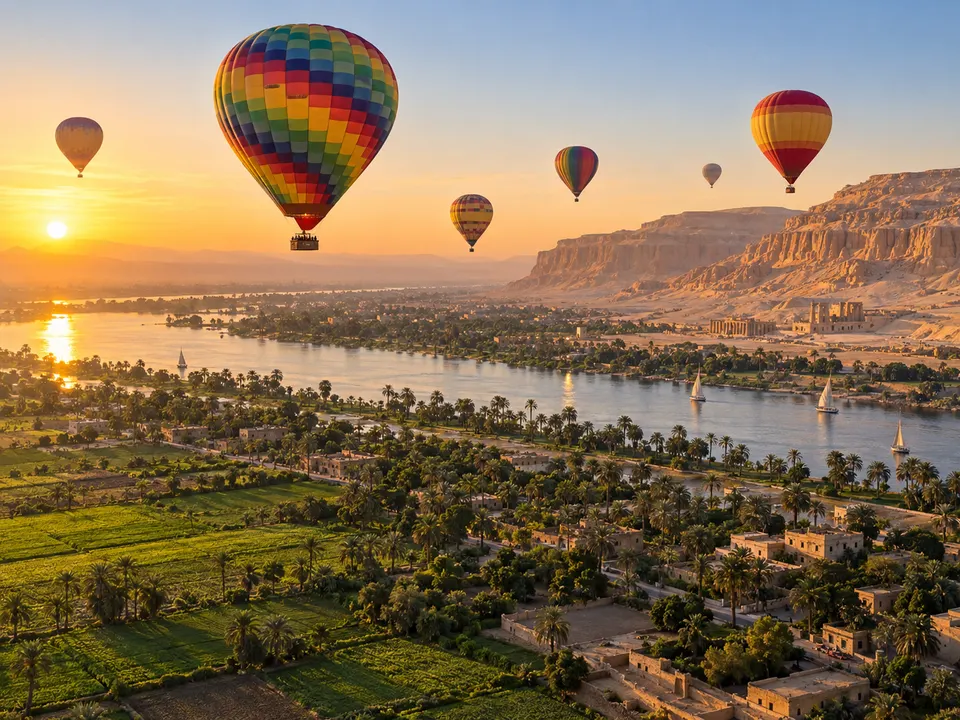
Chrám Hatšepsut v Dér el-Bahrí (asi 1479 až 1458 př. n. l., architekt Senenmut) se zvedá ve třech sloupových terasách proti skalní stěně thébského pohoří, s reliéfy výpravy do Puntu a Hathořinou kaplí. Memnonovy kolosy, dvě 18 m vysoké sochy Amenhotepa III., stojí u cesty k němu. Obojí je na každém výletu po západním břehu; balón nad nimi letí za východu slunce.
Hatshepsut ruled Egypt for twenty years as pharaoh in her own right, and her mortuary temple is unlike any other: three terraces of columns climbing the cliff at Deir el-Bahari next to the Middle Kingdom temple of Mentuhotep II, aligned on Karnak across the river. The upper terrace was restored by a Polish mission over fifty years.
The reliefs on the middle terrace tell the expedition she sent to the land of Punt (probably Eritrea or Somalia) for incense trees, with the fat queen of Punt and the fish of the Red Sea, and the story of her divine birth by Amun. The chapels of Hathor and Anubis keep their colour. Her successor Thutmose III chiselled out her name; the archaeologists put it back.
The Colossi of Memnon on the road are all that stands of the largest temple in Thebes, that of Amenhotep III. After an earthquake in 27 BC the northern statue "sang" at dawn and the Greeks and Romans came to hear it; Septimius Severus repaired it and the singing stopped.
Nejlepší doba: Brzy ráno; balóny přelétají mezi 06:00 a 07:00.
Luxor
Oba břehy Nilu za jeden den: dopoledne hrobky faraonů, odpoledne velké chrámy.