Louxor
Louxor journée complète : Vallée des Rois, temple d'Hatchepsout, colosses de Memnon, Karnak et temple de Louxor
Les deux rives du Nil en une journée : les tombes des pharaons le matin, les grands temples l'après-midi.

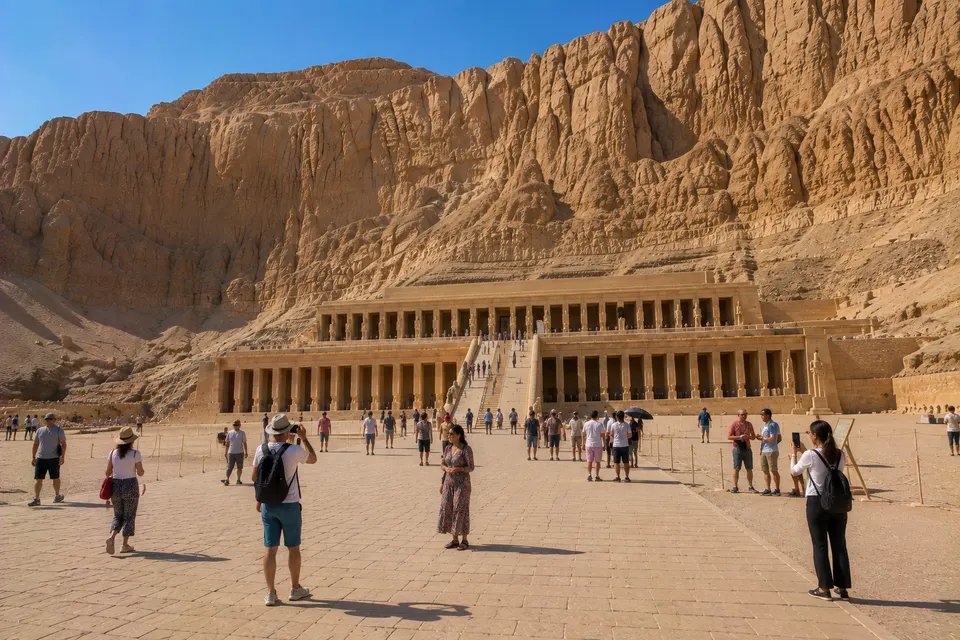
Le temple à terrasses de la femme qui régna en roi, sous la falaise de Deir el-Bahari.
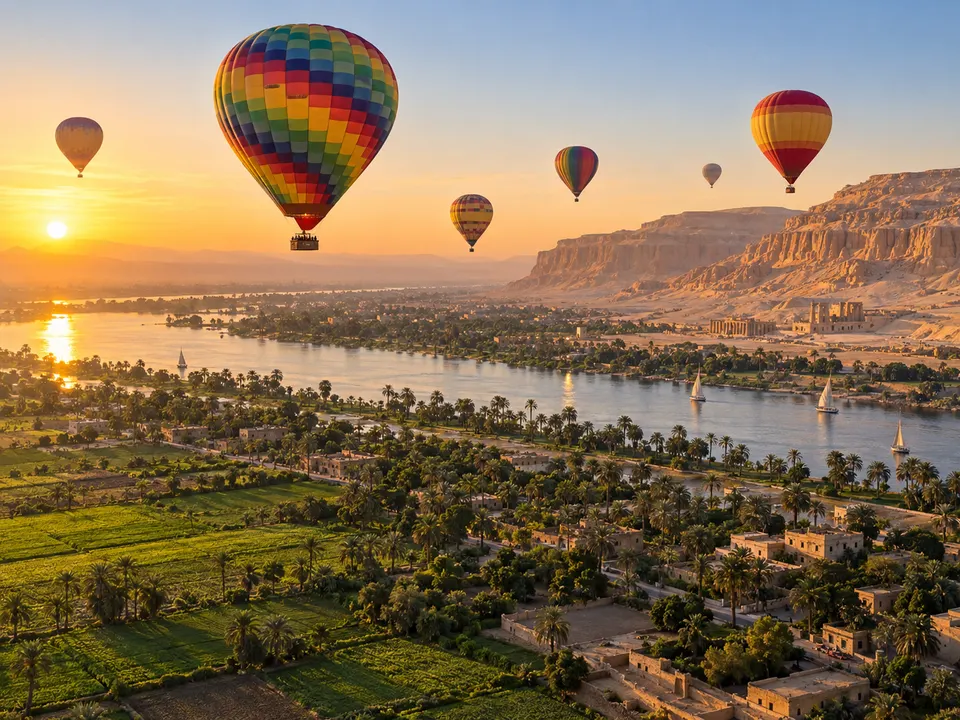
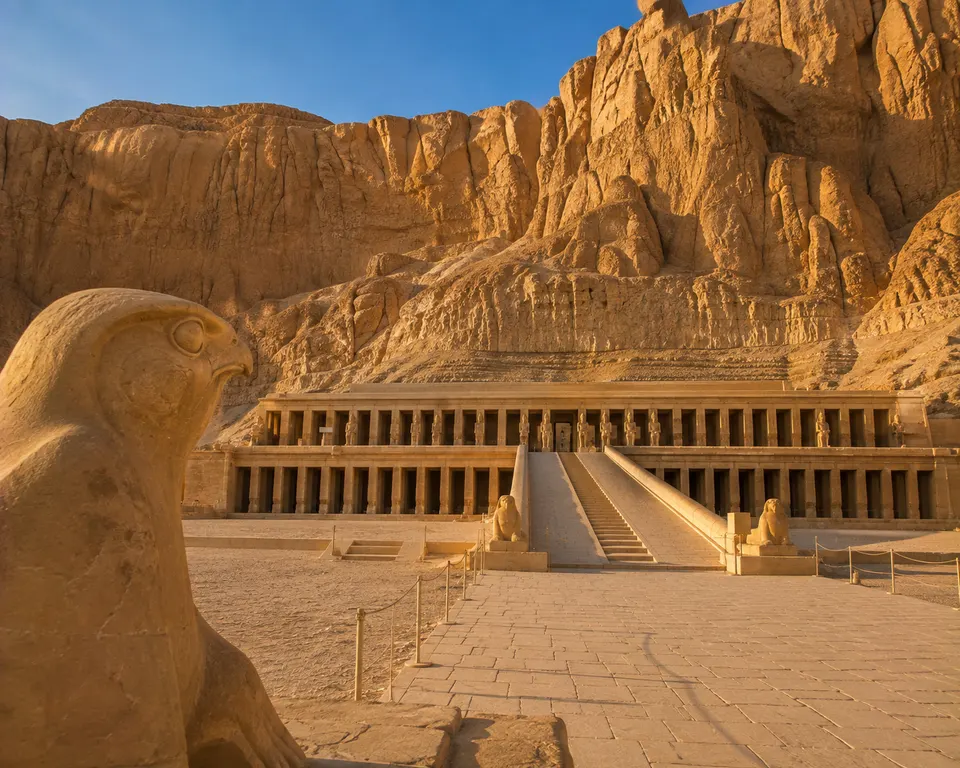
Le temple d'Hatchepsout à Deir el-Bahari (vers 1479 à 1458 av. J.-C., architecte Senenmout) s'élève en trois terrasses à colonnades contre la falaise de la montagne thébaine, avec les reliefs de l'expédition au pays de Pount et la chapelle d'Hathor. Les colosses de Memnon, les deux statues de 18 m d'Amenhotep III, se dressent sur la route qui y mène. Les deux sont sur chaque excursion rive ouest ; la montgolfière les survole au lever du soleil.
Hatshepsut ruled Egypt for twenty years as pharaoh in her own right, and her mortuary temple is unlike any other: three terraces of columns climbing the cliff at Deir el-Bahari next to the Middle Kingdom temple of Mentuhotep II, aligned on Karnak across the river. The upper terrace was restored by a Polish mission over fifty years.
The reliefs on the middle terrace tell the expedition she sent to the land of Punt (probably Eritrea or Somalia) for incense trees, with the fat queen of Punt and the fish of the Red Sea, and the story of her divine birth by Amun. The chapels of Hathor and Anubis keep their colour. Her successor Thutmose III chiselled out her name; the archaeologists put it back.
The Colossi of Memnon on the road are all that stands of the largest temple in Thebes, that of Amenhotep III. After an earthquake in 27 BC the northern statue "sang" at dawn and the Greeks and Romans came to hear it; Septimius Severus repaired it and the singing stopped.
Meilleure période: Tôt le matin ; les montgolfières passent entre 06h00 et 07h00.

Louxor
Les deux rives du Nil en une journée : les tombes des pharaons le matin, les grands temples l'après-midi.